

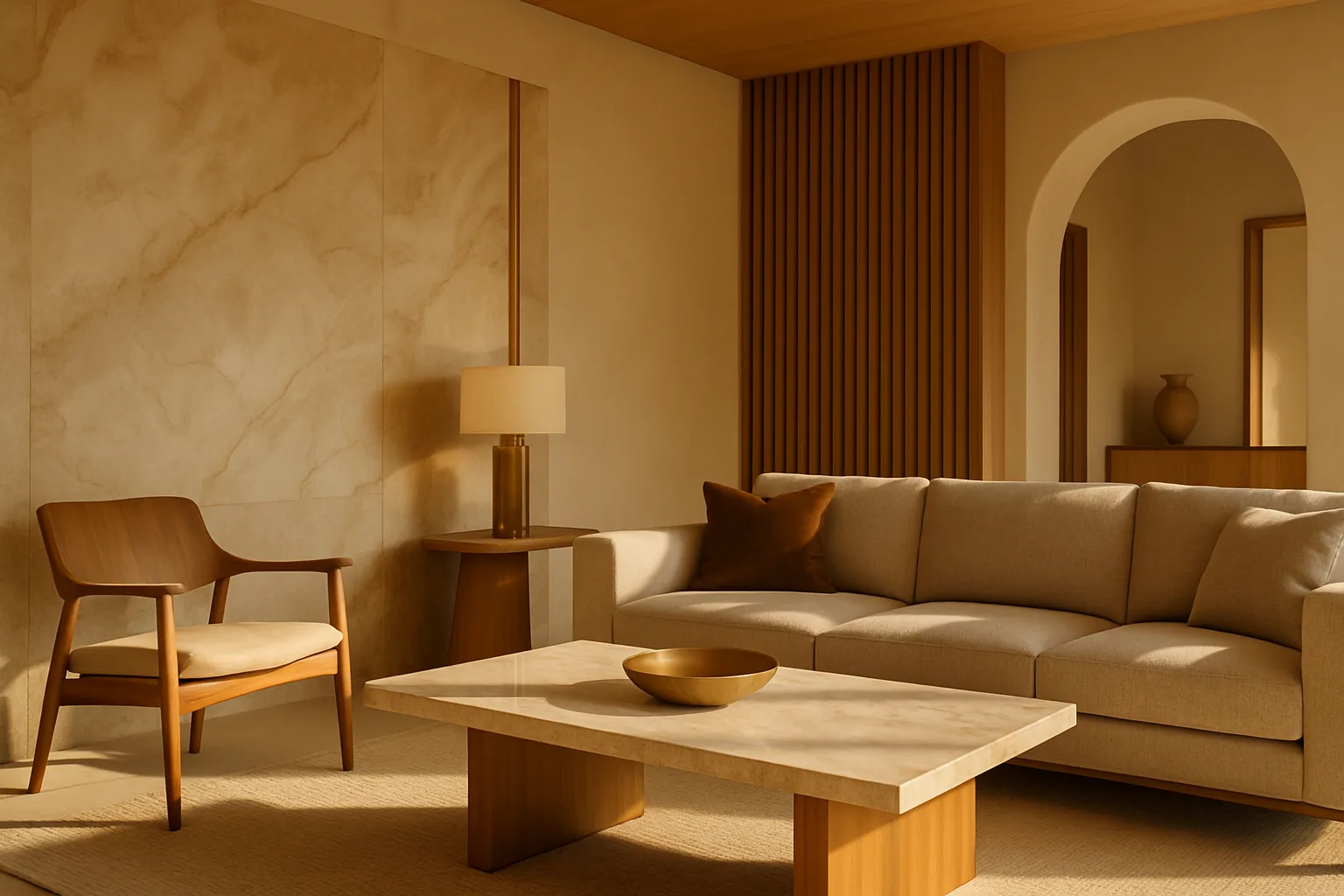
Discover how mid-century modern design can bring warmth and sophistication to Saudi homes, blending 1950s elegance with Arabic living.
Why Mid-Century Modern Works in Saudi Homes
Mid-century modern design, with its clean lines, organic curves, and warm wood tones, is a natural fit for Saudi homes. The style’s low-slung sofas and open-plan layouts align perfectly with the traditional majlis seating arrangement, where guests sit close to the floor on comfortable cushions. The use of walnut and teak wood warms the cool marble floors common in Saudi villas, creating a balanced and inviting atmosphere. Additionally, the emphasis on craftsmanship and natural materials resonates with the Saudi appreciation for quality and heritage.
In the Saudi context, mid-century modern can be adapted to local tastes by incorporating Arabic craft elements. Brass accents, handwoven textiles, and geometric screens can be layered onto mid-century silhouettes without appearing kitschy. This fusion creates a unique aesthetic that feels both international and deeply rooted in Saudi culture. For example, a mid-century modern sofa with tapered legs can be paired with a handwoven Sadu fabric throw, bridging the gap between two design worlds.
The style’s versatility makes it suitable for both apartments in Khobar and villas in Riyadh. In smaller spaces, the open-plan flow and multifunctional furniture typical of mid-century modern maximize functionality. In larger homes, the style’s understated elegance provides a canvas for showcasing statement pieces, such as a vintage-inspired credenza or a sculptural floor lamp. The key is to maintain a balance between the minimalist mid-century ethos and the layered richness of Arabic design.
Moreover, mid-century modern’s focus on bringing the outdoors in through large windows and natural light complements the Saudi climate, where outdoor living is cherished during cooler months. By using sheer curtains and strategically placed mirrors, homeowners can enhance natural light while maintaining privacy. This approach not only brightens the space but also connects the interior with the surrounding landscape, a principle that aligns with both mid-century modern and traditional Arabic architecture.
How to Adapt Mid-Century Modern for Majlis Layouts
The majlis, a formal gathering space in Saudi homes, traditionally features low seating arranged along the walls. Mid-century modern design can be adapted to this layout by selecting low-profile sofas and armchairs with tapered legs. These pieces maintain the majlis’s intimate scale while introducing the clean lines and organic forms characteristic of mid-century modern. For instance, a pair of mid-century modern lounge chairs upholstered in neutral linen can flank a low walnut coffee table, creating a conversation area that respects tradition while embracing modernity.
To further integrate mid-century modern into the majlis, consider the use of modular seating. Sectional sofas with reversible chaise options allow for flexible arrangements that can be reconfigured for large gatherings or intimate family time. Fabrics should be durable and easy to maintain, such as performance velvets or leather in warm tones like camel or terracotta. These materials not only withstand frequent use but also add a touch of luxury.
Lighting plays a crucial role in the majlis. Mid-century modern lighting fixtures, such as sputnik chandeliers or arc floor lamps, can serve as focal points while providing ambient light. Dimmable options allow for adjusting the mood from festive to relaxed. Additionally, incorporating traditional Arabic lighting elements, like pierced brass lanterns, can create a beautiful contrast and cultural dialogue.
Accessories should be curated to avoid clutter. A vintage-inspired rug with geometric patterns can anchor the seating area, while a few well-chosen cushions in handwoven fabrics add texture and color. A geometric screen, reminiscent of mashrabiya, can be used as a room divider or decorative element, casting intricate shadows when backlit. This blend of mid-century modern and Arabic elements results in a majlis that is both stylish and functional.
What Materials and Colors Define Mid-Century Modern in Saudi Arabia?
Mid-century modern design is characterized by a specific palette of materials and colors that can be easily adapted to the Saudi context. The foundation of the style is warm wood, particularly walnut, teak, and rosewood. These woods, with their rich grains and honeyed tones, contrast beautifully with the cool marble and porcelain tiles often used in Saudi homes. For a more local touch, consider using reclaimed wood from traditional Saudi doors or beams, which adds history and sustainability.
Metals are another key element. Brass, in particular, is a staple of mid-century modern and also holds cultural significance in Saudi Arabia. Brass accents can be found in lighting fixtures, drawer pulls, and decorative objects. When paired with the right wood tones, brass adds a subtle glamour that aligns with the quiet luxury aesthetic. Other metals like matte black or chrome can be used sparingly for a more contemporary edge.
Color-wise, mid-century modern typically features earthy tones: mustard yellow, olive green, burnt orange, and deep teal. These colors can be introduced through upholstery, rugs, and artwork. In Saudi homes, these hues can be balanced with neutral bases like beige, cream, or soft grey to keep the space feeling light and airy. For a more vibrant look, consider incorporating jewel tones like emerald or sapphire, which are popular in Arabic design.
Textiles are essential for softening the hard surfaces common in Saudi interiors. Wool, cotton, and linen are preferred for their breathability and natural feel. Handwoven fabrics, such as those made by local artisans, can be used for curtains, cushion covers, and throws. A mid-century modern sofa upholstered in a neutral linen can be paired with a handwoven Saudi wool rug in a geometric pattern, creating a harmonious blend of styles.
How to Keep a Mid-Century Modern Room from Feeling Cold or Foreign
One common concern among Saudi homeowners is that mid-century modern might feel too cold or foreign. To avoid this, focus on warmth and texture. Incorporate plenty of natural materials like wood, leather, and wool. Layer rugs and cushions to add softness. Use warm lighting with dimmers to create a cozy ambiance. Add personal touches like family photos, traditional Arabic coffee pots, or handmade ceramics to infuse the space with local character.
Another strategy is to mix mid-century modern pieces with traditional Arabic furniture. For example, a mid-century modern dining table can be paired with chairs featuring intricate geometric carvings. Or a vintage credenza can display a collection of Omani silver or Yemeni brass. This mixing not only prevents the room from feeling like a showroom but also tells a story of cultural exchange and personal history.
Color can also warm up a space. While mid-century modern often uses cool tones like teal and grey, adding warm hues like terracotta, saffron, and rust can create a welcoming feel. These colors can be introduced through textiles, artwork, or even a feature wall. In Saudi homes, where hospitality is paramount, a warm and inviting atmosphere is essential.
Finally, consider the scale of furniture. Mid-century modern pieces are often lower and more compact, which can make a large room feel empty. To avoid this, use area rugs to define zones and add tall plants or floor lamps to draw the eye upward. This creates a sense of fullness without clutter. By carefully balancing mid-century modern elements with local touches, you can achieve a space that feels both sophisticated and familiar.
Where to Source Mid-Century Modern Furniture in Saudi Arabia
Sourcing authentic mid-century modern furniture in Saudi Arabia can be a challenge, but there are options. Vintage stores in Riyadh and Khobar occasionally carry original pieces from the 1950s and 60s. Online marketplaces like Haraj and Instagram boutiques often list pre-owned mid-century modern items. However, due to limited supply, many homeowners opt for high-quality reproductions or custom-made pieces.
Local furniture makers in Saudi Arabia can craft mid-century modern designs using traditional techniques and materials. For example, a local carpenter can create a walnut coffee table with tapered legs, or a sofa with a solid wood frame and upholstery in a fabric of your choice. This approach supports local craftsmanship and allows for customization to fit your space.
For those who prefer to buy new, several international brands with a mid-century modern aesthetic have showrooms in Saudi Arabia. Brands like West Elm, CB2, and Article offer pieces that can be shipped or purchased locally. Additionally, online retailers like Nuqta and Sary provide access to a wider range of products. When buying new, look for solid wood construction, dovetail joints, and high-density foam cushions to ensure quality.
Accessories can be sourced from local artisans. Brass items can be found in the souks of Dammam or Riyadh, while handwoven textiles can be commissioned from weavers in Al-Ahsa. These unique pieces add authenticity and support the local economy. By combining vintage finds, custom pieces, and new purchases, you can create a mid-century modern home that is both personal and sustainable.
Lighting and Layout Tips for Mid-Century Modern Saudi Homes
Lighting is critical in mid-century modern design, and in Saudi homes, it must balance functionality with ambiance. Start with layered lighting: ambient, task, and accent. Recessed lighting can provide general illumination, while floor and table lamps add task lighting for reading or conversation. Accent lighting, such as picture lights or LED strips, can highlight architectural features or artwork.
Mid-century modern lighting fixtures are iconic and can serve as sculptural elements. Sputnik chandeliers, globe pendants, and arc lamps are classic choices. In Saudi homes, these can be paired with traditional lanterns for a fusion look. Dimmers are essential to adjust lighting for different occasions, from bright family gatherings to intimate evening conversations.
Layout should prioritize flow and conversation. In an open-plan living area, define zones with rugs and furniture arrangement. The majlis area can be anchored by a large rug with low seating, while a dining area can feature a round table for easy conversation. Keep pathways clear and avoid blocking natural light from windows.
Incorporate mirrors to reflect light and create a sense of space. A large mirror with a minimalist frame can be placed opposite a window to double the natural light. Sheer curtains in linen or cotton can filter harsh sunlight while maintaining privacy. For evening ambiance, use candles or lanterns to create a warm glow. By carefully planning lighting and layout, you can achieve a mid-century modern home that is both stylish and functional for Saudi living.
◈ Key Takeaways
- ✦Blend mid-century modern with Arabic elements: pair low-slung sofas with handwoven Sadu textiles and brass accents for a culturally resonant look.
- ✦Choose warm woods like walnut and teak to contrast with cool marble floors and add warmth to Saudi interiors.
- ✦Adapt majlis layouts with modular seating and low-profile furniture to maintain tradition while embracing mid-century modern lines.
- ✦Prevent a cold feel by layering rugs, using warm lighting, and mixing in personal and traditional Arabic decor.
- ✦Source furniture from local artisans, vintage markets, and international brands to create an authentic and personalized space.
Frequently Asked Questions
❓ What is mid-century modern design?
Mid-century modern design is a style that emerged in the mid-20th century, characterized by clean lines, organic curves, and a blend of traditional and modern materials. In Saudi homes, this style can be adapted to create open, airy spaces that complement the local climate and lifestyle. It emphasizes functionality and simplicity, making it a timeless choice for contemporary interiors.
❓ What is mid-century modern interior design?
Mid-century modern interior design focuses on open floor plans, large windows, and a seamless connection between indoor and outdoor spaces. In Saudi Arabia, this translates to using light colors, natural textures, and strategic window treatments to manage sunlight while maintaining the airy feel. Key elements include iconic furniture pieces, geometric patterns, and a clutter-free aesthetic.
❓ What is mid-century modern architecture?
Mid-century modern architecture is known for its flat planes, large glass windows, and integration with nature. In Saudi Arabia, architects adapt these principles by incorporating shading devices, courtyards, and passive cooling techniques to suit the desert climate. This results in homes that are both stylish and energy-efficient.
❓ How did mid-century modern start?
Mid-century modern started in the mid-1940s to late 1960s, driven by post-war optimism and advancements in materials like plywood and steel. In Saudi Arabia, the style gained popularity as the country modernized, with architects blending international trends with local traditions. Today, it continues to influence Saudi interiors, offering a balance of nostalgia and modernity.
❓ What is mid-century furniture?
Mid-century furniture features sleek lines, tapered legs, and a mix of materials such as wood, metal, and upholstery. In Saudi homes, these pieces can be paired with traditional textiles and patterns to create a unique fusion style. Look for iconic designs like Eames chairs or Noguchi tables, which are versatile and timeless.
Ready to Transform Your Space?
Ready to bring mid-century modern elegance to your Saudi home? Contact SB Interior Design for a personalized consultation and let our experts craft a space that blends timeless design with local soul.
SB Interior Design
Quiet Luxury Interior Design — Khobar, Saudi Arabia