
Transform your workspace into a serene oasis with modern Arabic design elements — where quiet luxury meets cultural heritage in 2026.
Embracing Modern Arabic Interior Design in Your Home Office
The best luxury home office ideas combine ergonomic functionality with timeless design. For a modern Arabic interior design approach, this means using solid hardwood desks, high-backed velvet or leather chairs, layered geometric rugs, brass or wrought-iron lighting fixtures, and warm earthy color palettes anchored by deep blue or terracotta accents. This style blends traditional Gulf craftsmanship mashrabiya screens, Arabic calligraphy, hand-knotted textiles with contemporary workspace needs, creating a productive, culturally resonant environment.
What Makes a Great Luxury Home Office?
A great luxury home office balances three things: ergonomic function, material quality, and personal meaning.
Most home office design guides focus on the first desk height, monitor placement, cable management. Fewer address the second, and almost none address the third.
A truly luxury home office interior design goes beyond specification. It creates an environment you want to spend time in, one that reflects who you are and what you value.
In a modern Arabic design context, “luxury” does not mean excess. It means restraint applied to quality — fewer pieces, each chosen with intention, each made to last. A hand-oiled walnut desk. A single piece of Arabic calligraphy on the wall. A hand-knotted wool rug that grounds the room acoustically and visually. These choices accumulate into something greater than the sum of their parts.
This philosophy widely known in 2026 design circles as “quiet luxury” aligns naturally with the traditional Arabic design principle of itqan: the pursuit of excellence and craftsmanship in everything you make or commission.
How Should You Plan Your Home Office Layout?
Start with the functional skeleton, then layer in cultural character.
Before selecting a single piece of furniture or a wall color, plan the spatial logic of your office. A well-designed home office interior layout should achieve four things:
- Position your desk relative to natural light
- Define two zones — a primary work zone (desk, task chair, monitor) and a secondary break or meeting zone. In Arabic design tradition, this secondary zone takes the form of a compact majlis corner: low seating with floor cushions, a small brass-topped side table, and space for informal conversation or video calls.
- Plan for acoustic control — villa architecture with stone floors and high ceilings creates echo. A large area rug, textile wall panels, and full-length curtains absorb sound effectively and are also core elements of Arabic interior design.
- Allow for airflow — traditional mashrabiya screens (wooden lattice panels) are not merely decorative. Their open lattice structure promotes passive ventilation, a centuries-old solution well-adapted to Gulf climates that translates beautifully into a modern home office as a room divider or window treatment.
What Are the Best Home Office Design Ideas for a Modern Arabic Style?
The strongest home office design ideas for this style center on warm materials, geometric detail, and layered cultural references.
Here is a complete design framework, section by section:
Layout and Space Planning
An open layout that allows easy movement between the desk, the storage wall, and the seating zone is essential. Allow a minimum clear walkway of 90 centimeters around all working furniture. Keep the floor plan honest do not overfill the room. In Arabic design, negative space is considered as carefully as occupied space.
Color Palette: What Colors Work Best?
Modern Arabic interior design draws its palette from the natural landscape of the Arabian Peninsula and from the rich pigments of traditional Islamic tilework and textiles.
What Furniture Should You Choose for a Luxury Home Office?
Invest in the three anchor pieces first: the desk, the chair, and the rug.
These are the items you interact with for eight or more hours daily. They determine the ergonomic quality of your workspace, and they do the heaviest visual work in the room. Everything else — shelving, lighting, accessories — plays a supporting role.
1-The Desk
A large solid-wood desk with a natural or hand-oiled finish is the room’s centerpiece. Teak, walnut, and mahogany are ideal choices — beautiful, durable, and appropriate in scale for a proper workspace. Aim for a minimum width of 140 centimeters to accommodate a monitor, writing surface, and secondary items without crowding.
Practical considerations: integrate cable management from the start. Channels routed through or under the desk surface keep the workspace visually calm — essential for the “quiet luxury” aesthetic.
2-Ergonomic Seating with Cultural Character
A high-backed executive chair upholstered in genuine leather or performance velvet in deep navy, warm cognac, or rich burgundy provides both lumbar support and visual weight appropriate for a luxury home office.
Luxury Home Office Furniture: Storage and Display
Stylish open shelving units in dark-stained hardwood or blackened metal — with geometric fretwork panels as dividers or backing — serve both practical storage and aesthetic display functions.
The key to Arabic-style shelving is curation, not accumulation. Display a small selection of meaningful objects: a brass dallah, a hand-thrown ceramic bowl, a framed calligraphy piece, a curated stack of books. Leave space between objects. Modular shelving systems with adjustable heights are a practical 2026 choice — they allow you to reconfigure the space as your needs evolve.
3-The Majlis Corner: A Culturally Rooted Break Zone
One of the most distinctive home office ideas in a modern Arabic design context is the incorporation of a compact majlis seating area. Low seating — a banquette or floor cushions in kilim, ikat, or hand-embroidered linen — with a small low table creates a natural break zone that also functions as an informal meeting space for video calls.
What Is the Best Lighting for a Luxury Home Office?
Good home office lighting operates on three layers. All three are necessary; none is optional.
Layer 1: Natural Light Management
Orient your desk to receive morning light (east-facing) where possible. Morning daylight — in the 5,000–6,500K color temperature range — is the most alertness-supporting spectrum of the day. Use sheer curtains to diffuse rather than block, and add external roller blinds for the intense 1–4pm period when Saudi afternoon sun becomes overwhelming.
Layer 2: Task Lighting
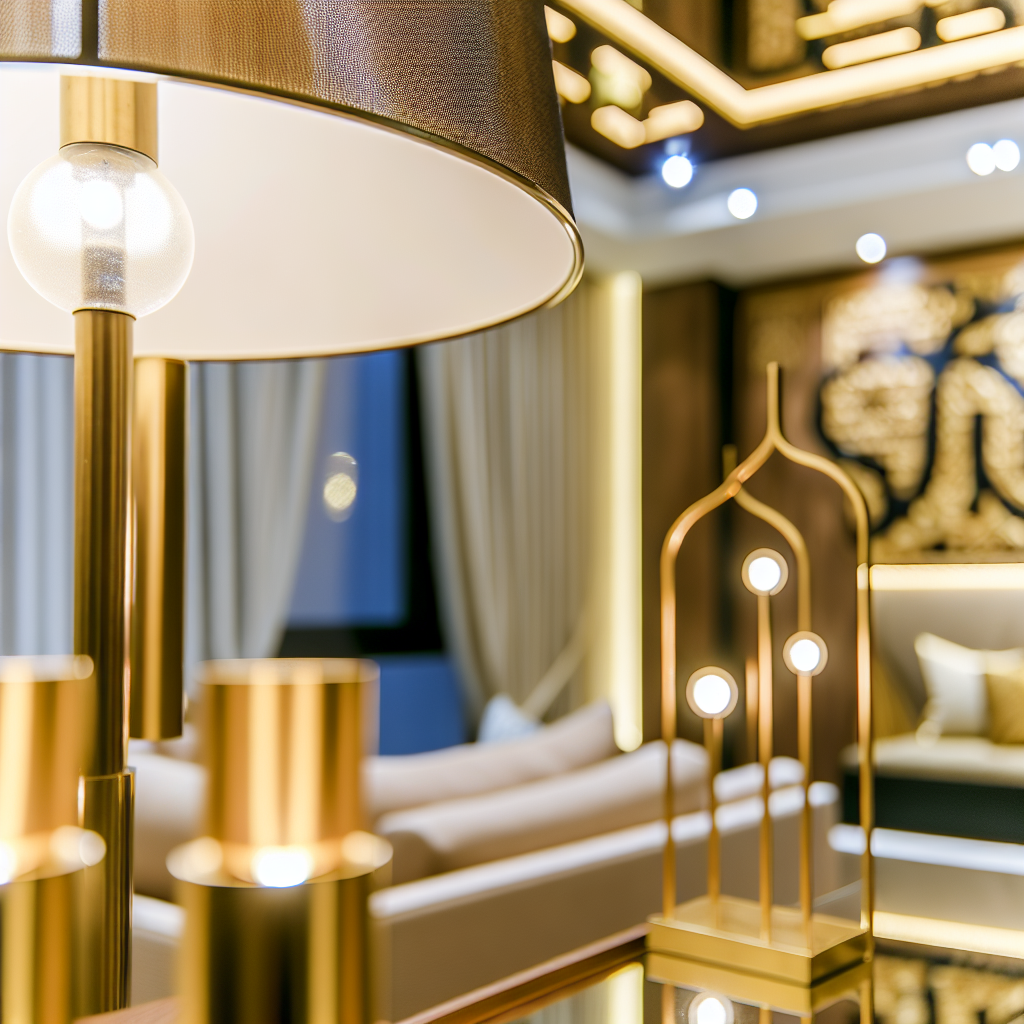
Your desk lamp should provide focused, shadow-free illumination at 4,000–5,000K (neutral to cool white) during working hours. Look for designs that incorporate Arabic design details: intricate metalwork shades, patterned glass diffusers, or brass-finished bases that tie the lamp naturally into the room’s material palette.
In 2026, smart desk lamps with tunable color temperature, built-in wireless charging pads, and USB-C ports are widely available at a range of price points. They eliminate cable clutter and allow you to shift from work-focus lighting to relaxation-mode lighting without changing fixtures.
Layer 3: Ambient and Accent Lighting
A statement pendant light — oversized brass, wrought iron, or hand-blown glass — serves as both the primary ambient source and the room’s most visible design object. Choose a fixture that commands attention without overwhelming the space.
Wall sconces inspired by mashrabiya patterns cast intricate geometric shadow patterns on walls after dark, creating a quietly theatrical evening atmosphere. LED strip lighting installed under shelving produces a “floating” effect that elevates the perceived quality of built-in storage. Dimmer switches on all circuits allow you to tune the room to any activity or mood.
Circadian lighting — smart systems that automatically shift color temperature from cool morning daylight through neutral afternoon white to warm amber in the evening — is one of the highest-impact technology investments available for a home office in 2026. It aligns your workspace environment with your body’s natural rhythms, supporting both focused performance and healthy recovery.
What Are the 2026 Home Office Interior Design Trends Worth Knowing?
Three trends are defining the leading edge of home office design in 2026, and all three align naturally with modern Arabic interior design.
Quiet Luxury
Quiet luxury means investing in high-quality, timeless pieces that communicate sophistication through material and craft rather than brand visibility or decorative excess. In Arabic design terms, this is itqan — the pursuit of excellence. Hand-finished wood surfaces, natural stone accents, bespoke joinery, and carefully selected heritage objects: each chosen for intrinsic quality and meaning. This is a direct counter-movement to the maximalist Gulf interiors of the previous decade, and it reflects a maturing design sensibility across the region.
Biophilic Design
Connecting indoor spaces with the natural world is especially valuable in the Saudi climate, where extreme heat can make outdoor environments difficult to enjoy for much of the year. Indoor plants that thrive in indirect light — snake plants, fiddle-leaf figs, pothos, ZZ plants — improve air quality and reduce psychological stress measurably. Natural materials like rattan, bamboo, cork, and unpolished stone reinforce the biophilic connection. Tabletop water features with geometric ceramic bases introduce calming ambient sound. In 2026, wall-mounted living plant panels with integrated drip irrigation are increasingly accessible for residential home offices.
Tech-Integrated Heritage
The most sophisticated modern Arabic home offices in 2026 blend cultural artifacts with seamless technology. A mashrabiya room divider with integrated LED backlighting becomes a statement installation at sunset. A traditional calligraphy piece with a slim smart display embedded in the frame shows your daily calendar. A built-in speaker system concealed behind fabric wall panels plays traditional Arabic music without visible hardware. These innovations honor cultural roots while embracing the conveniences of contemporary professional life — a balance that resonates deeply with the Vision 2030 generation of Gulf homeowners and remote professionals.
How Do You Choose the Right Interior Designer for a Luxury Home Office?
The right design partner makes the difference between a beautiful result and an expensive disappointment.
When evaluating interior designers for a luxury home office project in Saudi Arabia or the Gulf, look for:
- A verifiable portfolio of completed residential projects — specifically home offices or study spaces — in a Gulf or Arabic design context
- Regional material sourcing knowledge: familiarity with local stone suppliers, Saudi craft artisans, and regional furniture makers who work in hardwoods and traditional joinery
- Bilingual consultation capability (Arabic and English) to ensure cultural nuance is not lost in translation
- End-to-end project management: from initial concept and mood board through to procurement, fit-out supervision, and final styling
- Client references from homeowners in your specific region — Riyadh, the Eastern Province, or your city
The right question to ask any prospective designer: “How do you balance cultural authenticity with functional, contemporary workspace design?” Their answer reveals their real depth of understanding.