

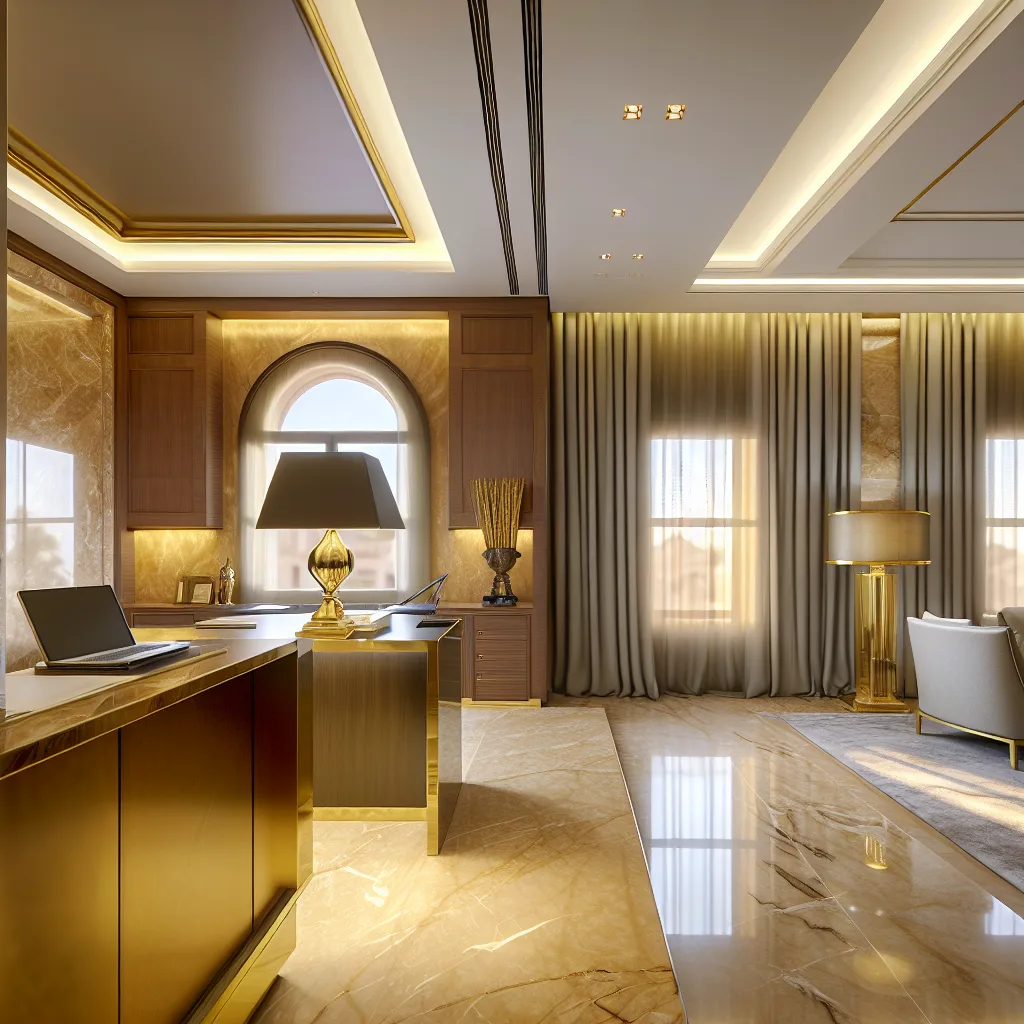
Discover how to create a serene, productive home office that embodies quiet luxury and modern Arabic design for the Saudi professional.
The Rise of the Home Office in Saudi Arabia: A New Era of Remote Work
The landscape of professional life in Saudi Arabia has shifted dramatically. With the Kingdom’s Vision 2030 driving digital transformation and a more flexible work culture, remote work is no longer a temporary arrangement but a permanent fixture for many professionals. From Khobar to Riyadh, executives, entrepreneurs, and creatives are seeking dedicated spaces within their homes that rival the sophistication of a corporate boardroom. This is not merely about placing a desk in a corner; it is about crafting an environment that fosters focus, creativity, and a sense of calm. As an interior designer Riyadh, we have observed a growing demand for home offices that are both functional and deeply personal, reflecting the owner’s success and taste without shouting for attention. The quiet luxury movement, with its emphasis on understated elegance and impeccable craftsmanship, aligns perfectly with this need. It is about creating a space where every element—from the grain of the wood to the weight of the fabric—speaks of quality and intention. For the Saudi professional, this means a home office that is a sanctuary from the demands of the day, a place where work feels less like a chore and more like a purposeful ritual. The design must account for the local climate, with its intense sunlight and dust, as well as cultural preferences for privacy and hospitality, even within a private workspace. This is where the expertise of a seasoned interior designer Riyadh becomes invaluable, translating these nuanced requirements into a cohesive, beautiful reality. The goal is to create a room that not only boosts productivity but also enhances well-being, a space that you look forward to entering each morning.
Defining Quiet Luxury: Materials and Craftsmanship for the Saudi Home Office
Quiet luxury in interior design is not about logos or ostentatious displays of wealth. It is about the subtle language of materials, the precision of joinery, and the timelessness of form. In a home office for a Saudi professional, this translates to a careful selection of natural stones, fine woods, and textiles that age gracefully. Consider a desk crafted from solid American walnut or European oak, with a live edge that celebrates the wood’s natural character. The surface might be finished with a matte lacquer that feels smooth as silk, avoiding the glare of high-gloss finishes that can be distracting in the bright Saudi light. For the flooring, wide-plank oak in a smoked or limed finish adds warmth and texture, while a hand-knotted silk and wool rug in a neutral palette defines the seating area. The walls could be clad in linen wallcovering or a subtle grasscloth, adding depth without pattern. When it comes to stone, a slab of Calacatta marble or Pietra Grey on a console table or as a desk top introduces a touch of geological luxury. The key is restraint: one or two statement materials, used generously, create a greater impact than a cacophony of finishes. An interior designer Riyadh will guide you in sourcing these materials locally, from the marble yards of the Eastern Province to the bespoke joinery workshops in Riyadh, ensuring that every piece is not only beautiful but also suited to the region’s climate. The craftsmanship must be impeccable—dovetail joints, hidden hinges, and seamless transitions between materials. This is the essence of quiet luxury: the details that are not immediately obvious but are felt in the quality of the space. For the Saudi homeowner, this approach resonates with a cultural appreciation for artistry and longevity, where a piece of furniture is an heirloom, not a disposable commodity.
Layout and Zoning: Creating a Productive Flow in Your Home Office
A successful home office layout balances three primary zones: the focus zone, the collaboration zone, and the storage zone. The focus zone centers around the desk, which should be positioned to take advantage of natural light without causing glare on your screen. In Saudi Arabia, where the sun is intense, north-facing windows are ideal for consistent, soft light. If your office faces south or west, consider motorized blackout shades or sheer curtains with a high UV protection factor. The desk should be large enough to accommodate your work essentials—a laptop, monitor, notepad, and perhaps a small vase of fresh flowers—but not so large that it dominates the room. Behind the desk, a statement wall with a custom joinery piece can house books, awards, and personal artifacts, creating a backdrop for video calls that is both professional and personal. The collaboration zone is a seating area with two comfortable armchairs or a small sofa, ideal for informal meetings or a moment of reflection. Choose pieces with clean lines and upholstered in performance fabrics like velvet or bouclé that can withstand the occasional coffee spill. A low table in marble or smoked glass completes the setting. The storage zone should be integrated and discreet. Floor-to-ceiling cabinetry with a mix of open shelving and closed doors allows you to display curated objects while hiding clutter. Consider a hidden minibar or coffee station behind a paneled door—a nod to Saudi hospitality, even in a private workspace. An interior designer Riyadh will assess the room’s proportions and natural light to create a layout that feels spacious and uncluttered. The circulation path should be clear, allowing you to move from desk to seating to storage without obstruction. For smaller spaces, a floating desk with a built-in credenza can maximize floor area. The goal is a room that supports your workflow without imposing on it, where every piece of furniture has a purpose and a place.
Color Palette and Lighting: Crafting a Calm and Focused Atmosphere
The color palette for a quiet luxury home office should be serene and sophisticated, drawing inspiration from the natural landscape of Saudi Arabia. Think of the soft beige of desert sand, the warm grey of mountain stone, and the deep blue of the Arabian Gulf at dusk. These hues create a backdrop that is both calming and grounding. For the walls, a matte finish in a warm white or pale greige provides a neutral canvas. Accent walls can be treated with a textured limewash or a deep charcoal for drama, but use this sparingly. The key is to avoid high-contrast colors that can be visually jarring. Instead, layer tones of the same family—cream, taupe, mushroom, and slate—to create depth. Introduce color through art and accessories: a painting with a pop of saffron or emerald green, a ceramic vase in cobalt blue, or a stack of books with rich leather bindings. Lighting is perhaps the most critical element in a home office, and in Saudi Arabia, where natural light is abundant, it must be carefully managed. Layer your lighting with ambient, task, and accent fixtures. A central chandelier or flush-mount fixture in brushed brass or matte black provides ambient light. For task lighting, an adjustable architect’s lamp in polished nickel or a sculptural desk lamp in ceramic adds both function and form. Accent lighting can highlight a piece of art or the texture of a wallcovering. Consider a floor lamp with a linen shade in the seating area for a soft glow. Dimmers are essential, allowing you to adjust the light intensity throughout the day. An interior designer Riyadh will specify fixtures that complement the room’s architecture and provide the right color temperature—around 3000K for a warm, inviting glow that mimics sunset. Avoid harsh overhead lighting; instead, create pools of light that define each zone. The result is a space that feels intimate and focused, where the lighting enhances your mood and productivity.
Furniture Selection: Bespoke Pieces for the Discerning Saudi Professional
In a quiet luxury home office, furniture is not just functional; it is sculptural. Every piece should be chosen for its form, material, and how it contributes to the overall harmony of the space. The desk is the centerpiece, and it deserves careful consideration. A bespoke desk from a local artisan in Riyadh or Khobar can be designed to your exact specifications—width, depth, height, and storage needs. Consider a design with a floating top and a central pedestal for a clean, modern look, or a classic partner’s desk with drawers on both sides for a more traditional feel. The chair is equally important. Invest in an ergonomic chair that is also beautiful. Look for designs in leather and polished aluminum, with adjustable lumbar support and a swivel base. Brands like Herman Miller or Vitra offer models that can be customized with premium leathers and finishes. For the seating area, choose armchairs with a low profile and generous proportions. Upholster them in a textured fabric like a wool blend or a linen velvet in a neutral tone. A small side table in marble or wood provides a surface for a coffee cup or a book. Storage should be integrated and bespoke. Custom cabinetry can be designed to house your printer, files, and office supplies behind closed doors, while open shelves display your curated collection of books and objets d’art. The joinery should be seamless, with handles that are integrated or minimal. An interior designer Riyadh will work with you to select pieces that reflect your personal style while maintaining the quiet luxury aesthetic. The goal is a room that feels cohesive, where each piece relates to the others in scale, material, and finish. Avoid matching sets; instead, mix periods and styles for a collected, layered look. A mid-century modern desk can coexist with a contemporary chair and a traditional rug, creating a space that feels both timeless and personal.
Technology Integration and Acoustics: The Invisible Backbone of a Modern Home Office
A truly luxurious home office is one where technology enhances the experience without being seen. This requires careful planning during the design phase. Work with an interior designer Riyadh to integrate power outlets, data ports, and cable management systems into the furniture and architecture. A desk with a built-in wire management tray or a grommet for cables keeps the surface clean. Consider a media console behind the desk that houses your router, printer, and other equipment, with ventilation and easy access. For video calls, the camera should be at eye level, and the background should be intentional. A bookshelf with curated objects or a paneled wall with a subtle texture creates a professional backdrop. Lighting for video calls is crucial: a ring light or a softbox placed behind the monitor can eliminate shadows and create a flattering glow. Acoustics are often overlooked but are essential for concentration and privacy. In Saudi homes, where rooms can be large and open, sound can travel. Add acoustic panels behind the desk or on the ceiling, disguised as art or integrated into the joinery. A thick wool rug and heavy curtains also absorb sound. For complete privacy, consider a sound masking system that emits a gentle white noise. The goal is a space where you can hear yourself think, free from the noise of the household or the street. An interior designer Riyadh will coordinate with AV specialists to ensure that all technology is seamlessly integrated, from the smart lighting system to the motorized shades. The result is a room that feels calm and uncluttered, where technology serves you without demanding attention. This is the essence of quiet luxury: the invisible systems that make life effortless and elegant.
Personalization and Art: Infusing Your Space with Meaning and Beauty
The final layer in a quiet luxury home office is personalization. This is where the space becomes truly yours, reflecting your journey, tastes, and aspirations. Art plays a central role. Choose pieces that resonate with you—a landscape painting by a Saudi artist, a photograph of the Empty Quarter, or a contemporary sculpture in bronze. The scale should be appropriate for the wall; a single large piece can anchor the room, while a gallery wall of smaller works creates visual interest. Lighting for art is essential: picture lights or track lighting can highlight the texture and color of the piece. Beyond art, incorporate objects that tell a story. A collection of antique maps, a set of vintage brass instruments, or a few carefully chosen ceramics from a local potter in Al-Ahsa. These objects add soul to the space. Books are another powerful element. A curated library of design, art, and literature not only provides reference but also creates a sense of intellectual richness. Arrange them by color or size for a graphic impact, or mix them with objects for a more casual look. Plants are also important, bringing life and softness to the room. In the Saudi climate, choose low-maintenance varieties like snake plants, zamioculcas, or a fiddle-leaf fig, which thrive in indirect light. A large pot in ceramic or terracotta adds a sculptural element. An interior designer Riyadh will help you edit your collection, ensuring that every object has a place and purpose. The goal is a space that feels curated, not cluttered, where each element contributes to the overall narrative of quiet luxury. This is your sanctuary, a reflection of your success and your values, a room where you can work with clarity and purpose. For more inspiration, explore our portfolio of luxury home designs and see how we bring quiet luxury to life.
◈ Key Takeaways
- ✦Prioritize natural materials like walnut, Calacatta marble, and linen for a quiet luxury aesthetic that ages gracefully.
- ✦Zone your home office into focus, collaboration, and storage areas to enhance productivity and flow.
- ✦Layer lighting with ambient, task, and accent fixtures, using dimmers to adapt to the intense Saudi sunlight.
- ✦Integrate technology invisibly with custom cable management and acoustic solutions for a serene environment.
- ✦Personalize with curated art, books, and objects that reflect your story and create a sense of calm.
Frequently Asked Questions
❓ How much does an interior designer in Riyadh cost?
Interior designer fees in Riyadh vary widely, typically ranging from SAR 200 to SAR 800 per hour for consultations, or a flat fee of SAR 10,000 to SAR 50,000 for a full home office project. For a quiet luxury design, expect higher rates due to premium materials and bespoke furniture.
❓ What is quiet luxury interior design?
Quiet luxury interior design focuses on understated elegance, high-quality materials, and timeless aesthetics rather than flashy trends. In a Saudi home office, this might include natural stone, custom woodwork, and neutral color palettes that create a serene, productive environment.
❓ Which interior designer in Riyadh specializes in home offices?
Many top interior designers in Riyadh, such as those at SB Interior Design, offer specialized home office design services. Look for portfolios that emphasize functional layouts, integrated technology, and quiet luxury elements like acoustic panels and ergonomic furniture.
❓ How long does a home office design project take in Riyadh?
A typical home office design project in Riyadh takes 4 to 8 weeks from initial consultation to completion, depending on complexity and custom furniture lead times. For quiet luxury designs with imported materials, allow up to 12 weeks.
❓ Can I hire an interior designer in Riyadh for a virtual consultation?
Yes, many interior designers in Riyadh offer virtual consultations, especially for quiet luxury home office designs. This is convenient for busy professionals and allows you to discuss layout, materials, and budget from the comfort of your home.
Ready to Transform Your Space?
Ready to design your quiet luxury home office? Contact SB Interior Design for a consultation in Khobar or Riyadh.
SB Interior Design
Quiet Luxury Interior Design — Khobar, Saudi Arabia