
Discover modern Arabic interior design for Saudi homes—from majlis layouts to materials, lighting, and color palettes that balance heritage and contemporary luxury.
What Is Modern Arabic Interior Design?
Modern Arabic interior design is a contemporary approach that honors traditional Arabic and Islamic design principles—such as geometric patterns, calligraphy, and majlis hospitality—while incorporating clean lines, neutral palettes, and modern materials like engineered wood, glass, and brushed metals. It balances cultural authenticity with the comfort and functionality expected in today’s Saudi homes.
In practice, this style avoids heavy ornamentation in favor of subtle luxury. You’ll see mashrabiya-inspired screens reinterpreted in laser-cut steel or CNC-milled wood, and traditional Sadu motifs woven into modern upholstery. The result is a space that feels rooted in Saudi heritage yet perfectly suited to contemporary living—whether in a Khobar villa or a Riyadh apartment. For a deeper look at how natural elements shape this aesthetic, explore our guide to modern Arabic interiors in Saudi Arabia.
Key elements include a neutral base (beige, sand, warm grey) with accent colors drawn from the desert landscape—terracotta, olive green, and deep blue. Furniture is often low-profile to reflect majlis seating traditions, but upgraded with high-resilience foam and performance fabrics that withstand the Saudi climate. Lighting is layered: ambient cove lighting, task lighting for reading, and decorative pendants that echo traditional lanterns.
Modern Arabic interior design also prioritizes privacy and hospitality. Layouts often separate public and private zones, with the majlis positioned near the entrance for guest reception. This thoughtful planning ensures that the home functions beautifully for both everyday family life and large gatherings, which are central to Saudi culture.
How Do You Create a Modern Majlis That Feels Both Traditional and Contemporary?
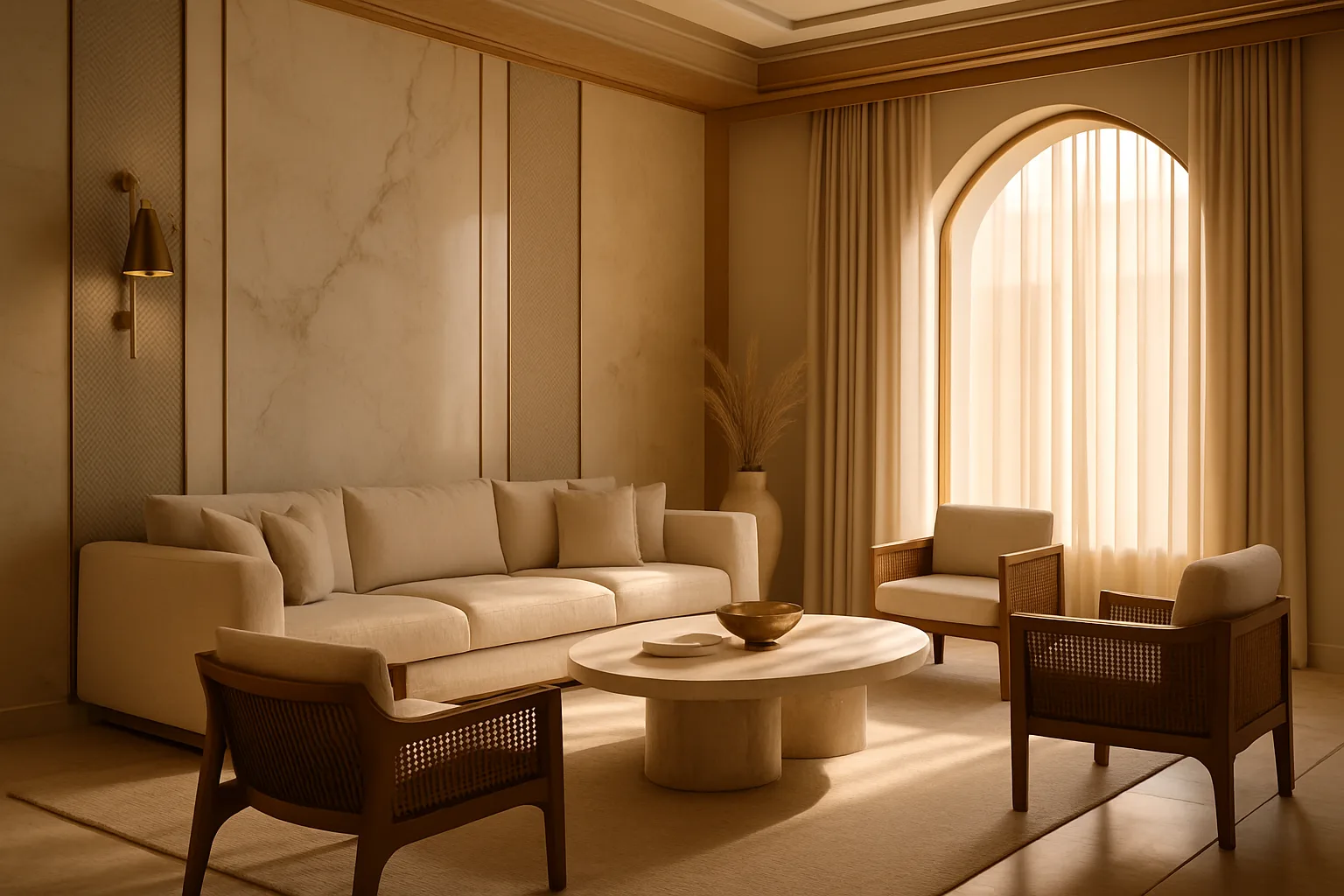
To create a modern majlis, start with a neutral color palette—think warm beige, soft grey, or sand—and layer in traditional patterns through textiles and accessories rather than overwhelming the space with ornate wallpaper. Choose a low-profile sectional or modular seating arrangement that encourages conversation, and anchor it with a large, hand-knotted rug featuring a subtle geometric motif.
Lighting is critical. Install dimmable LED cove lighting around the perimeter to create a soft glow, then add a statement chandelier or a cluster of pendant lights inspired by traditional brass lanterns. For task lighting, use floor lamps with adjustable arms near seating areas. In Khobar, where natural light is abundant, sheer curtains with a blackout layer allow you to control glare while maintaining privacy.
Materials should be both luxurious and durable. Consider a marble coffee table (Omani beige or Carrara) paired with a walnut or oak console. For upholstery, performance fabrics like Sunbrella or Crypton in muted tones resist spills and fading—essential for a room that hosts frequent gatherings. Add a touch of gold or brass through drawer pulls, mirror frames, or a sculptural side table.
Finally, incorporate storage cleverly. Built-in cabinetry with push-to-open doors keeps the space clutter-free, while a discreet niche can house a coffee station for serving guests. The goal is a majlis that feels welcoming and elegant, yet practical for daily use. For more inspiration, see our dedicated majlis design ideas.
Which Materials and Finishes Define Modern Arabic Interiors in Saudi Arabia?
Modern Arabic interiors in Saudi Arabia often feature a mix of natural and engineered materials that balance beauty with resilience. For flooring, large-format porcelain tiles that mimic marble are popular for their durability and low maintenance, especially in high-traffic areas. In living rooms and majlis, hardwood or engineered oak adds warmth; ensure it’s acclimated to local humidity to prevent warping.
Stone is a hallmark of luxury. Marble—such as Calacatta, Statuario, or local Saudi granite—is used for countertops, accent walls, and fireplace surrounds. For a more contemporary look, consider honed or leathered finishes rather than polished, which can be slippery. Limestone and travertine are also excellent choices for their earthy tones and natural texture. Our stone and marble selection guide covers this in detail.
Wood species like walnut, oak, and teak bring richness. Teak is particularly suited to outdoor areas due to its natural oils. For cabinetry, matte lacquer in soft grey or taupe is a modern alternative to traditional dark wood, and it reflects light beautifully. Metals—brass, bronze, and brushed nickel—add a touch of glamour without being flashy. Use them sparingly in hardware, lighting, and frames.
Textiles play a crucial role. Wool and silk blends for rugs, linen and cotton for upholstery, and velvet for accent pillows create layers of comfort. In Saudi homes, performance fabrics are essential to withstand the heat and frequent use. Don’t forget acoustic materials: fabric-wrapped panels or perforated wood ceilings can reduce echo in large open-plan spaces.
What Color Palettes Work Best for Modern Arabic Interior Design?
The most successful modern Arabic color palettes are drawn from the natural Saudi landscape: desert sand, warm beige, terracotta, olive green, and the deep blue of the Gulf. These earthy tones create a calming, grounded atmosphere that feels both timeless and contemporary. Use them as a base, then add contrast with crisp white or charcoal for a modern edge.
For a luxurious feel, consider a monochromatic scheme in shades of taupe and cream, accented with brushed gold and dark wood. This approach works beautifully in majlis and formal living rooms. In family areas, you can introduce more vibrant hues—such as burnt orange or teal—through artwork, cushions, or a feature wall. Just keep the overall palette cohesive by repeating one or two accent colors throughout the home.
In 2026, we’re seeing a rise in biophilic palettes that connect interiors to nature. Think sage green, clay, and stone grey paired with natural materials like rattan and jute. This trend aligns perfectly with modern Arabic design, which has always celebrated natural elements. For a bold statement, a deep navy or emerald green can be used in a powder room or study, creating a jewel-box effect.
Remember that lighting affects color perception. In Saudi Arabia’s bright sunlight, colors can appear washed out; test paint samples at different times of day. Use warm white LED bulbs (2700K–3000K) to enhance the cozy feel of earthy tones.
How Can You Integrate Arabic Geometric Patterns Without Overwhelming the Space?
The key to using Arabic geometric patterns in a modern interior is restraint. Instead of covering every surface, choose one or two focal points: a feature wall with a subtle stencil or wallpaper, a screen with a mashrabiya-inspired cutout, or a rug with a repeating motif. This allows the pattern to be appreciated without visual chaos.
Consider scale. A large-scale geometric pattern on a single wall can act as artwork, while a small-scale pattern on cushions or a throw adds texture. In a majlis, you might use a geometric-patterned rug as the foundation, then keep furniture and walls solid. Alternatively, use patterned tiles in a bathroom or entryway for a dramatic yet contained effect.
Materials matter. Laser-cut metal screens are a contemporary way to introduce pattern while dividing spaces. CNC-milled wood panels can create a 3D geometric effect that changes with the light. For a softer touch, embroidered fabrics or block-printed linens bring in pattern without hard edges.
Color also plays a role. Tone-on-tone patterns (e.g., beige on cream) are subtle and sophisticated, while high-contrast combinations (black and white) make a bold statement. In modern Arabic design, we often see patterns in metallic finishes—gold or bronze—which catch the light and add a sense of luxury.
What Lighting Strategies Enhance Modern Arabic Interiors?
Lighting in modern Arabic interiors should be layered to create depth and flexibility. Start with ambient lighting: cove lighting or recessed ceiling lights provide a soft, even glow. In Saudi homes, where ceilings are often high, consider a central chandelier or a cluster of pendants to fill the vertical space and act as a focal point.
Task lighting is essential for reading and conversation. Floor lamps with adjustable heads, table lamps on consoles, and picture lights above artwork serve both function and style. Use warm white bulbs (2700K–3000K) to create a welcoming atmosphere. Dimmers are a must—they allow you to adjust the mood from bright and energetic to intimate and relaxed.
Accent lighting highlights architectural features or special pieces. LED strip lights under kitchen cabinets, inside display niches, or along staircases add a modern touch. For a traditional nod, use lantern-style sconces or a pierced metal pendant that casts intricate shadows.
In Khobar’s climate, where outdoor living is popular in cooler months, extend lighting to terraces and courtyards. Weatherproof fixtures and string lights can create a magical outdoor majlis. Always consult a lighting designer to ensure proper placement and control—it’s an investment that pays off in ambiance and functionality.
How Do You Balance Open-Plan Living with Privacy in Saudi Homes?
Open-plan living is popular in modern Saudi homes, but privacy remains a cultural priority. The solution is to design flexible spaces that can be open for family gatherings or closed off for intimate moments. Use sliding partitions, pocket doors, or screens to divide areas without sacrificing light and flow.
In a majlis, for example, you might have a large opening to the dining area that can be closed with a decorative screen or curtain. For everyday family life, keep it open; for formal guest receptions, close it to create a dedicated hosting zone. This adaptability is key to modern Arabic design.
Zoning is another strategy. Use furniture arrangement, rugs, and ceiling treatments to define different areas within an open plan. A change in floor level or a dropped ceiling can subtly separate the living room from the kitchen. Acoustic panels or heavy curtains can also dampen sound, ensuring privacy even when doors are open.
Finally, consider the placement of private quarters. Bedrooms and family bathrooms should be located away from guest areas. In multi-generational homes, a separate entrance for the majlis or a guest suite is ideal. By planning circulation carefully, you can achieve both openness and privacy—a balance that defines truly modern Arabic living.
◈ Key Takeaways
- ✦Start with a neutral base (beige, sand, warm grey) and layer in earthy accents like terracotta or olive green for a modern Arabic palette.
- ✦Use performance fabrics and durable materials like porcelain tile and engineered wood to withstand Saudi Arabia’s climate and frequent gatherings.
- ✦Incorporate Arabic geometric patterns sparingly—on a feature wall, screen, or rug—to avoid visual clutter.
- ✦Layer lighting with dimmers, cove lights, and statement pendants to create flexibility for both everyday life and formal majlis receptions.
- ✦Plan for privacy with sliding partitions or screens, especially in open-plan layouts, to respect cultural preferences while maintaining flow.
Frequently Asked Questions
❓ What is modern Arabic interior design?
Modern Arabic interior design blends traditional Arabic elements like geometric patterns, arches, and calligraphy with contemporary aesthetics such as clean lines, neutral colors, and open spaces. In Saudi Arabia, this style often incorporates local materials like stone and wood, and reflects the region’s cultural heritage while meeting modern lifestyle needs. It creates a harmonious balance between the old and the new, making spaces both functional and culturally resonant.
❓ What is modern luxury interior design in the context of Arabic style?
Modern luxury interior design in Arabic style combines opulent materials like gold, marble, and rich fabrics with sleek, minimalist forms. In Saudi Arabia, this often means using high-end finishes, custom furniture, and intricate detailing while maintaining a sense of spaciousness and comfort. The result is an elegant, sophisticated space that honors Arabic traditions and contemporary luxury trends.
❓ How does modern Arabic interior design differ from traditional Arabic design?
Modern Arabic interior design simplifies traditional elements, favoring cleaner lines, less ornamentation, and a more open layout compared to the intricate, heavily decorated traditional style. While traditional Arabic design often features dense patterns and enclosed spaces, the modern approach integrates these motifs in a subtle, contemporary way. In Saudi Arabia, this evolution reflects changing lifestyles and a desire for both cultural identity and modern functionality.
❓ What are key elements of modern Arabic interior design?
Key elements include geometric patterns, arches, mashrabiya screens, and calligraphy, combined with modern furniture, neutral color palettes, and natural materials. In Saudi Arabia, designers often incorporate local textiles and artisanal crafts to add authenticity. Lighting also plays a crucial role, with layered lighting creating ambiance and highlighting architectural features.
❓ How can I incorporate modern Arabic interior design into my home in Saudi Arabia?
Start by using a neutral base with accents of traditional patterns in cushions, rugs, or wall art. Incorporate arches or mashrabiya screens as room dividers or decorative features, and choose furniture with clean lines but subtle Arabic influences. In Saudi Arabia, you can also source local crafts and materials to ensure authenticity and support the community.
Ready to Transform Your Space?
Ready to transform your home with modern Arabic interior design? Contact SB Interior Design in Khobar for a personalized consultation and let us bring your vision to life.
SB Interior Design
Quiet Luxury Interior Design — Khobar, Saudi Arabia