

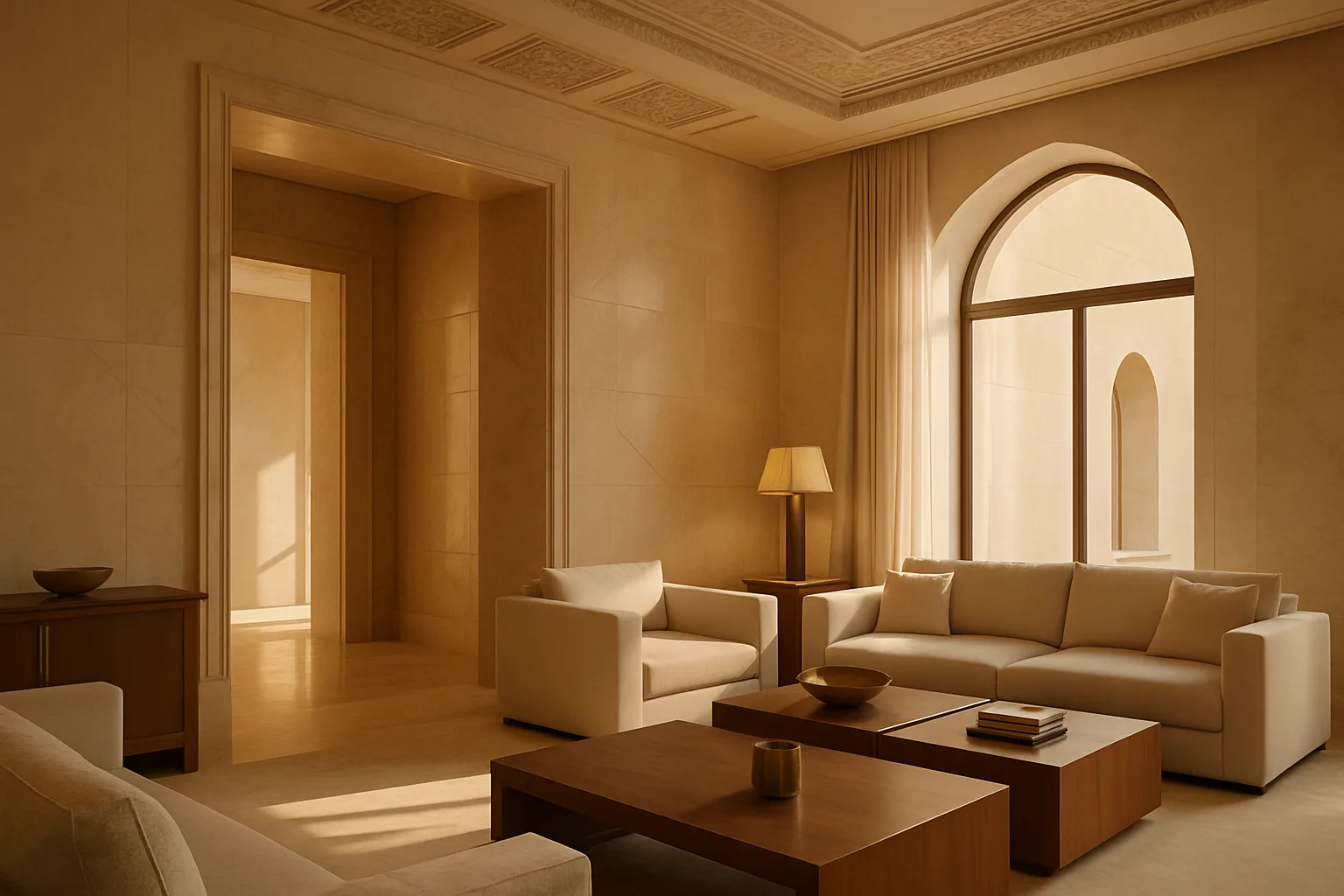
Learn to decode 3D renderings like a pro—spot material realism, lighting accuracy, and scale issues before you renovate your Saudi home.
What Exactly Are 3D Renderings and Why Do They Matter for Your Saudi Renovation?
3D renderings are photorealistic digital images generated from a 3D model of your future space. They show exactly how your renovated living room, majlis, or kitchen will look before a single hammer swings. For homeowners in Khobar, Riyadh, or Dammam, these visuals are the single most powerful tool to bridge the gap between imagination and reality. When you engage 3d rendering services in saudi arabia, you receive a lifelike preview that lets you evaluate design choices—from marble veining to lighting temperature—without costly mistakes.
Think of a rendering as a contract between you and your designer. It captures every decision: the exact shade of Calacatta gold marble on the feature wall, the brushed brass finish of the pendant lights, the weave of the wool carpet underfoot. In Saudi Arabia, where luxury and precision are cultural touchstones, a rendering ensures that your villa in Al Olaya or your apartment in Al Khobar’s Corniche area reflects your taste down to the last detail. Without it, you’re renovating blind, relying on samples and guesswork.
Moreover, 3D renderings are not just pretty pictures—they are technical documents. They reveal spatial relationships, traffic flow, and even how sunlight will move across the room at different times of day. For a Saudi home, where afternoon heat and evening gatherings shape daily life, understanding how light behaves is crucial. A rendering can show you whether your majlis will feel too dark at 3 PM or whether the western window will glare during sunset majlis gatherings.
Finally, renderings empower you to make informed decisions before construction begins. Change a tile or move a wall in the digital model, and you see the impact instantly. This saves you from expensive on-site changes and delays. In a market like Saudi Arabia, where renovation budgets are often substantial, the ability to iterate virtually is not a luxury—it’s a necessity. That’s why top 3d rendering services in saudi arabia are now standard for any serious residential or commercial project.
How Can You Tell If a 3D Rendering Is Realistic or Just a Pretty Picture?
The first thing to check is material realism. In a high-quality rendering, marble looks like marble—with subtle veins, slight translucency, and natural reflections. Wood shows grain and texture, not a flat brown surface. Fabrics have a visible weave and respond to light. When you look at a rendering from a reputable 3d rendering services in saudi arabia, you should be able to almost feel the coolness of the porcelain tile or the softness of the velvet sofa. If materials look plastic or overly smooth, the rendering is not photorealistic enough to guide your decisions.
Lighting is the second critical factor. Realistic renderings mimic natural and artificial light accurately. Look at how shadows fall—are they soft and diffused, or harsh and unnatural? Check the color temperature: warm LED strips under the kitchen cabinets should cast a cozy glow, while daylight from a skylight should be crisp and cool. In Saudi Arabia, where sunlight is intense, a rendering should show how sheer curtains diffuse that light or how blackout blinds create a dark, cool retreat. If the lighting looks flat or overly dramatic, the rendering may be misleading.
Scale and proportion are equally important. A common flaw in amateur renderings is furniture that looks too small or too large for the room. A 3-seater sofa should not look like a loveseat in a vast majlis, nor should a dining table overwhelm a small breakfast nook. Professional 3d rendering services in saudi arabia use accurate dimensions from your floor plan, so every element is to scale. Check doorways, ceiling heights, and the relationship between furniture and architectural features. If something feels off, ask your designer to verify the measurements.
Finally, consider the context. A good rendering includes realistic accessories—books on shelves, a cup of tea on the side table, a folded throw blanket. These details add life and help you visualize daily use. But beware of overly stylized renderings that look like magazine spreads with no connection to your actual space. The best renderings are both beautiful and truthful. They show you what your home will really look like, not an idealized version. When you review a rendering, ask yourself: ‘Could I live here?’ If the answer is yes, you’re on the right track.
What Design Elements Should You Scrutinize in Your 3D Rendering?
Start with the architectural finishes. In Saudi homes, marble and stone are ubiquitous—from the entrance foyer to the bathroom walls. In your rendering, examine the marble pattern. Is it book-matched or random? Does the veining flow naturally across slabs? For example, a Taj Mahal quartzite waterfall island in the kitchen should show continuous veining down the sides. If the rendering shows a jarring break, the actual installation might look worse. Similarly, check wood species: is the oak flooring a warm, natural tone, or does it look like a flat beige? The grain should be visible and consistent. For more guidance on selecting the right materials, refer to our guide to choosing stone and marble for Saudi homes.
Lighting fixtures deserve close attention. In a rendering, a chandelier should cast realistic light and shadows. Look at the fixture’s finish—is it polished chrome, brushed nickel, or antique brass? The rendering should reflect that finish accurately. Also, consider the lighting plan: are there layers of light—ambient, task, and accent? For a majlis, you might see a central crystal chandelier, wall sconces for warm pools of light, and cove lighting in the ceiling. Each should be visible in the rendering, showing how they work together to create a welcoming evening atmosphere.
Furniture and fabrics are the soul of a room. In your rendering, zoom in on the sofa—is the fabric linen, velvet, or leather? The texture should be discernible. For a Saudi living room, you might choose a deep emerald velvet sofa with gold legs. The rendering should show the velvet’s sheen and the metal’s polish. Check the rug pattern: is it a traditional Persian motif or a modern geometric design? The colors should be true to your selection. If the rendering looks washed out or overly saturated, the actual materials may differ. Our majlis sofa buying guide can help you understand how different fabrics and styles will appear in your space.
Finally, examine the layout and flow. Walk through the rendering mentally. Can you move from the entrance to the majlis without obstacles? Is the TV viewing distance comfortable from the sofa? In a Saudi home, the majlis often serves as a gathering space for extended family, so seating should be ample and arranged for conversation. The rendering should show clear pathways and a balanced composition. If something feels cramped or awkward, now is the time to adjust—not after the walls are built.
How Do 3D Renderings Help You Make Better Material and Color Choices?
Choosing materials for a Saudi home can be overwhelming—there are hundreds of marble types, wood finishes, and fabric options. 3D renderings simplify this by showing how materials look together in context. For example, you might be torn between a honed Bianco Carrara marble and a polished Nero Marquina for your bathroom. A rendering can place both in the same space, with the same lighting, so you see which one creates the mood you want. This is especially valuable in Saudi Arabia, where natural stone is a hallmark of luxury design.
Color palettes are another area where renderings shine. In a rendering, you can test a warm neutral palette of beige, taupe, and cream against a bolder scheme of deep blue and gold. You can see how the colors interact with natural light from large windows—something that’s critical in Saudi homes where afternoon sun can wash out colors. A rendering also helps you balance bold choices, like a feature wall in dark green, with softer surrounding tones. This prevents the common mistake of choosing colors in a showroom under fluorescent lights, only to find they look different in your home.
Texture is the third dimension of material selection. A rendering can show the difference between a matte, satin, or glossy finish on cabinetry. It can illustrate how a textured plaster wall catches light differently than smooth paint. For a Saudi majlis, you might want a textured wall covering with subtle Islamic geometric patterns. A rendering will reveal how that pattern looks from a distance and up close, helping you decide if it’s too busy or just right.
Finally, renderings allow you to experiment with combinations without risk. You can try pairing a walnut wood console with a brass mirror and a marble top—all in the same rendering. If the combination feels off, you can swap the wood to oak or the marble to quartzite. This iterative process is invaluable. It turns material selection from a guessing game into a confident, informed decision. And when you work with professional 3d rendering services in saudi arabia, you get the expertise to guide these choices, ensuring the final result is cohesive and timeless.
What Are the Common Pitfalls When Interpreting 3D Renderings?
One of the biggest pitfalls is assuming the rendering is 100% accurate. While photorealistic renderings are incredibly detailed, they are still digital simulations. Some materials, like certain marbles or hand-finished woods, have natural variations that cannot be fully captured. For example, a slab of Calacatta Viola marble might have more purple veining than the rendering shows. Always ask your designer for physical samples of key materials to compare against the rendering. This is especially important for high-end finishes where subtle differences matter.
Another pitfall is ignoring the lighting conditions in the rendering. Many renderings are created with ideal lighting—bright, even, and flattering. But your actual home may have different natural light patterns. A rendering might show a bright, airy kitchen, but if your kitchen faces north and gets little direct sun, it will look darker in reality. To avoid this, ask your designer to create a rendering with realistic lighting for your specific orientation and time of day. This is where 3d rendering services in saudi arabia excel, as they understand local light conditions.
Scale distortion is another common issue. Sometimes renderings use wide-angle lenses that make spaces look larger than they are. This can be misleading, especially for small apartments in Khobar or Riyadh. To counter this, always check the dimensions on the floor plan and compare them to the rendering. Ask for a rendering with a human figure or furniture that you know the size of, like a standard 90cm dining chair. This gives you a reference point for scale. For more tips on maximizing space in smaller homes, see our guide to modern Arabic design for small Khobar apartments.
Finally, don’t overlook the ‘wow factor’ trap. Some renderings are designed to impress with dramatic angles and stylized decor, but they may not reflect your actual lifestyle. A rendering might show a minimalist living room with a single sculpture, but you have children and need storage. Always evaluate the rendering against your practical needs. The best renderings are those that balance beauty with functionality. When you review a rendering, ask: ‘Does this space work for my family’s daily life?’ If not, request changes before construction begins.
How Can You Use 3D Renderings to Communicate With Your Designer and Contractor?
3D renderings are a universal language. They allow you to communicate your vision to your designer, contractor, and even your family without ambiguity. Instead of describing a ‘modern Arabic style’ or ‘luxury feel,’ you can point to the rendering and say, ‘I want the ceiling like this, but with a different lighting fixture.’ This clarity reduces misunderstandings and ensures everyone is on the same page from the start. In Saudi Arabia, where projects often involve multiple stakeholders, this is invaluable.
For your designer, renderings serve as a design brief. They show the intended mood, material palette, and spatial arrangement. Your designer can use the rendering to explain why certain choices were made—for example, why a darker wood was chosen to contrast with light marble. This dialogue helps you feel more confident in the design. It also allows you to request changes before any physical work begins, saving time and money.
For your contractor, renderings are a construction guide. They provide detailed information about finishes, lighting placements, and built-in furniture. A contractor can look at a rendering and understand exactly where the recessed lights should go, how the feature wall should be built, and what materials to order. This reduces the risk of on-site errors. In a renovation project, where changes are costly, having a clear visual reference is essential. It also helps with budgeting, as the contractor can provide more accurate quotes based on the rendering.
Finally, renderings are excellent for family decision-making. In Saudi culture, home design often involves the whole family. A rendering allows everyone to see the proposed design and offer input. This can prevent disagreements later. For example, if your spouse prefers a different sofa color, you can see it in the rendering before making a final decision. This collaborative process ensures the final design reflects everyone’s tastes. When you use 3d rendering services in saudi arabia, you’re not just getting a picture—you’re getting a tool for better communication and decision-making.
Why Should You Choose Professional 3D Rendering Services in Saudi Arabia?
Professional 3d rendering services in saudi arabia offer more than just pretty images. They bring local expertise that is crucial for Saudi homes. They understand the climate—how intense sunlight affects materials, how to design for privacy in a culture that values it, and how to incorporate traditional elements like majlis seating into modern layouts. This local knowledge ensures that your rendering is not only beautiful but also practical for your environment.
They also have access to advanced software and hardware that produces true-to-life visuals. This includes accurate lighting simulations, realistic material textures, and even virtual reality walkthroughs. With these tools, you can experience your future home before it’s built. You can walk through the majlis, open the kitchen cabinets, and see how the evening lighting looks. This immersive experience is invaluable for making confident decisions.
Professional services also offer revisions. Design is iterative, and your vision may evolve as you see renderings. A reputable firm will work with you to refine the design until you are completely satisfied. They will also coordinate with your architect and contractor to ensure the rendering is feasible to build. This integration prevents costly surprises during construction. In Saudi Arabia, where renovation projects can be complex, this level of service is worth the investment.
Finally, professional renderings add value to your property. If you ever decide to sell, having high-quality renderings of your home’s potential can attract buyers. They can also be used for permits and approvals, as they clearly show the intended design. In a competitive market like Riyadh or Jeddah, a well-designed home with professional visuals stands out. So, when you invest in 3d rendering services in saudi arabia, you’re not just planning a renovation—you’re enhancing your property’s future. For more insights on planning your renovation, explore our luxury home renovation budget planning guide for Saudi.
◈ Key Takeaways
- ✦Always compare physical material samples to your 3D rendering to account for natural variations in marble, wood, and fabric.
- ✦Ask for renderings with realistic lighting for your home’s orientation—not just ideal studio lighting—to avoid surprises.
- ✦Use the rendering to check scale by referencing known furniture sizes, like a 90cm dining chair, to prevent distortion.
- ✦Review the rendering with your contractor to ensure all details—from lighting placement to built-ins—are clear before construction.
- ✦Treat renderings as a communication tool: share them with family and stakeholders to align on design decisions early.
Frequently Asked Questions
❓ How much do 3D rendering services cost in Saudi Arabia?
In Saudi Arabia, 3D rendering services typically cost between SAR 500 and SAR 5,000 per project, depending on complexity, square footage, and the level of detail required. For a standard residential interior, you might pay around SAR 1,500 to SAR 3,000. Always request a detailed quote from providers in Khobar or Riyadh to get an accurate estimate.
❓ How long does it take to get a 3D rendering done in Saudi Arabia?
Most 3D rendering services in Saudi Arabia deliver initial drafts within 3 to 7 days, with final revisions taking up to 2 weeks. The timeline depends on the project’s scope and the provider’s workload. For urgent projects, many firms offer expedited services for an additional fee.
❓ What is included in 3D rendering services in Saudi Arabia?
Typical 3D rendering services in Saudi Arabia include 3D modeling, texturing, lighting, and photorealistic rendering of your interior or exterior space. Many providers also offer revisions, virtual tours, and even 360-degree views. Some packages may include furniture and decor sourcing suggestions tailored to Saudi tastes.
❓ Why should I use 3D rendering services before renovating in Saudi Arabia?
Using 3D rendering services in Saudi Arabia helps you visualize your renovation before any construction begins, saving time and money. It allows you to experiment with layouts, materials, and colors, and ensures you and your contractor are on the same page. This is especially valuable in Saudi Arabia where custom renovations are common.
❓ Can I get 3D rendering services for a villa in Khobar or Dammam?
Yes, many 3D rendering services in Saudi Arabia cater to villas and residential projects in Khobar, Dammam, and across the Eastern Province. Providers can create detailed renderings for entire villas, including living rooms, bedrooms, kitchens, and outdoor spaces. Be sure to choose a service with experience in local architectural styles and regulations.
Ready to Transform Your Space?
Ready to see your dream home before you build it? Book a consultation with SB Interior Design today and let our 3D rendering experts bring your vision to life.
SB Interior Design
Quiet Luxury Interior Design — Khobar, Saudi Arabia