

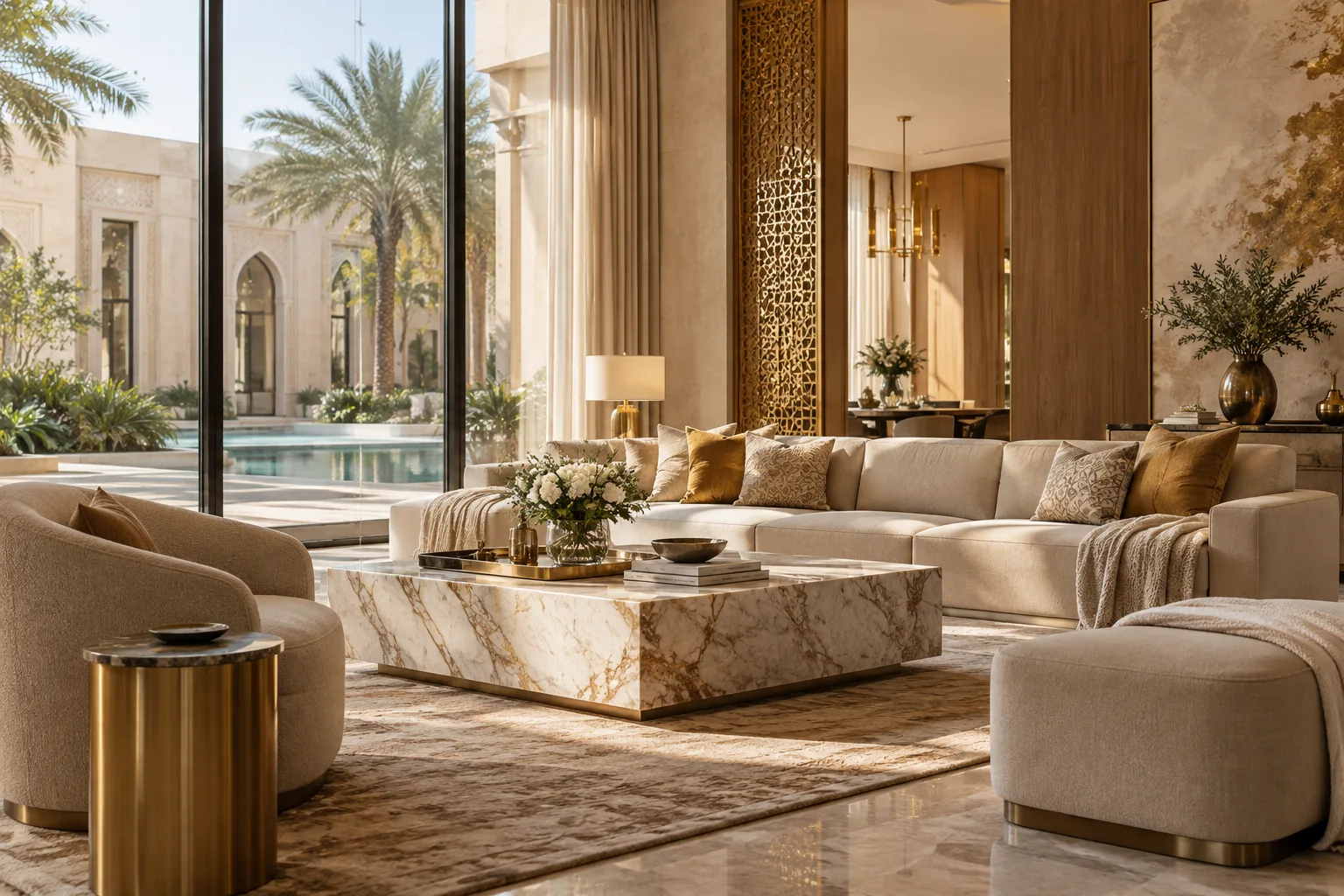
A phased, room-by-room roadmap for refreshing your Saudi villa between November and January — prioritising impact per riyal while keeping the home livable.
What Is the Smartest Way to Plan a Home Renovation in Riyadh This Winter?
The smartest approach to a home renovation in Riyadh during the November–January window is to sequence work by visibility and disruption, not by room. Start with the spaces guests see first — the entrance, the majlis, and the main living room — and complete them before hosting season peaks. Then move to private zones such as bedrooms and bathrooms in January, when the social calendar quiets down. This phased method keeps the villa livable, controls dust and noise, and ensures every riyal spent delivers a visible change before the first guests arrive.
In Riyadh and across the Eastern Province, winter is the only stretch of the year when you can open windows, dry plaster and paint quickly, and move furniture outdoors without battling extreme heat. Contractors are also more available than in the spring rush, and imported fabrics and lighting often arrive faster. Treat this window as a design-planning discipline: map your hosting dates first, then work backwards to assign each room a start and finish week.
A common mistake is to begin with the bedroom because it feels personal, or with the kitchen because it feels practical. Both are expensive and disruptive, and neither is what your guests will remember. The rooms that shape first impressions — the entrance, the formal majlis, and the living room — offer the highest visual return per riyal. A fresh coat of paint, a new lighting layer, and updated textiles in these three spaces can transform a villa for a fraction of a full renovation.
Finally, decide early what you will not touch. Structural changes, kitchen cabinetry, and bathroom tiling are best left for a dedicated renovation phase outside the hosting season. The winter refresh is about surfaces, light, and textiles — the layers that change the mood of a room without moving a single wall. Once you accept that boundary, the plan becomes manageable and the budget predictable.
Which Rooms Should You Tackle First in a Home Renovation in Riyadh?
Tackle the entrance, the formal majlis, and the main living room first. These three spaces carry the most social weight in a Saudi home, and they respond dramatically to relatively light interventions: lighting, paint, textiles, and a few statement pieces. Completing them before December gives you a polished backdrop for gatherings without disrupting the family’s daily routines.
The entrance sets the tone. In many Riyadh villas, the entry is a transitional corridor that has never been properly designed. Consider a console table in walnut or oak, a large mirror with a slim brass frame, and a pair of upholstered benches in a durable bouclé or performance linen. Add a layered lighting scheme: a pendant for general light, a table lamp for warmth, and a discreet floor wash to highlight texture. If the floor is pale marble, a runner in a deep tone — charcoal, bronze, or muted terracotta — will anchor the space and protect the stone.
The formal majlis is next. This is where the winter refresh delivers the most visible change per riyal. Start with the seating: reupholster in a heavy wool or wool-blend in a warm neutral, or add throws and cushions in cashmere and bouclé for texture. Replace the central rug with a denser, darker weave that grounds the room. Then address lighting: a new chandelier or a pair of floor lamps can shift the entire atmosphere from flat to layered. Keep the palette cohesive — sand, camel, deep olive, and brass — and resist the urge to introduce too many patterns. For more room-specific ideas, see our majlis design guide.
The main living room bridges family life and entertaining. Here, focus on flexibility: a modular sofa in a durable fabric, a pair of accent chairs that can be moved for conversation, and a rug large enough to define the seating zone. Add a console or sideboard in a rich wood species such as oak or teak to bring warmth. If the room feels dark, a large mirror opposite the main window will double the daylight. These changes are quick, reversible, and high-impact — exactly what a winter refresh should be.
How Can Lighting Layers Transform a Villa Without Major Construction?
Lighting layers transform a villa more than any other single intervention because they change how every surface, fabric, and finish is perceived. A room with only a central ceiling light feels flat and institutional; the same room with ambient, task, and accent layers feels warm, deep, and intentional. In a winter refresh, lighting is the highest-leverage upgrade you can make without touching a wall.
Start with ambient light: replace harsh cool-white bulbs with warm-white (2700K–3000K) sources throughout the living areas. This alone will make stone, wood, and textiles look richer. Then add task lighting where it matters — a floor lamp beside the majlis seating, a table lamp on the entrance console, a picture light above a favourite artwork. Finally, introduce accent lighting: LED strips under cabinetry, a wall washer to graze a textured wall, or a pair of uplights behind a plant to create shadow play.
In Saudi villas, ceiling height and architectural style vary widely. For classic interiors with gypsum cornices, a chandelier remains appropriate, but pair it with dimmable circuits so the room can shift from bright hosting mode to a softer evening mood. For modern interiors, consider track lighting or recessed spots with adjustable heads to highlight specific zones. In majlis spaces, wall sconces in brass or bronze add a layer of vertical light that makes the room feel taller and more intimate.
Practical considerations matter. Ensure all new fixtures are compatible with the existing voltage and dimming system, and group controls so you can switch scenes easily. If you are adding floor lamps, plan their positions around seating and walkways to avoid clutter. And remember maintenance: choose fixtures with accessible bulbs and avoid designs that trap dust in hard-to-reach places. A well-planned lighting layer will outlast any furniture purchase and continue to reward you every evening.
What Textile Swaps Give the Biggest Impact for the Budget?
Textile swaps give the biggest impact for the budget because they change colour, texture, and warmth without any construction work. In a winter refresh, focus on four categories: rugs, curtains, upholstery accents, and cushion covers. Replacing or layering these items can make a room feel entirely new for a fraction of the cost of new furniture.
Rugs are the foundation. In the majlis and living room, choose a dense wool or wool-blend rug in a warm neutral or deep tone. A darker rug grounds the space and hides the wear of hosting season. In bedrooms, a softer wool or cotton blend underfoot adds comfort. If the existing rug is in good condition, layer a smaller textured rug on top for a quick update. In Riyadh’s dry climate, natural fibres like wool and cotton are comfortable year-round, while synthetic fibres can feel static and less luxurious.
Curtains are the second lever. Swap lightweight summer sheers for heavier drapes in wool, velvet, or a lined linen blend. A double-track system with sheers and blackout drapes gives flexibility for privacy and light control. Choose a colour that relates to the wall but is a shade deeper — sand on cream, olive on sage, or charcoal on grey. The weight of the fabric alone will make the room feel warmer and more considered.
Upholstery accents and cushions are the finishing layer. Re-cover dining chair seats in a performance fabric, add throws in cashmere or bouclé to the majlis, and introduce cushion covers in a mix of textures — velvet, linen, and wool — in a tight palette. Avoid introducing too many new colours; instead, vary texture within a harmonious range. This approach keeps the room cohesive and allows you to change the look again next winter with minimal expense.
How Do You Phase a Renovation So the Villa Stays Livable Through the Holidays?
Phase the renovation by zone and by date, and protect at least one fully functional living area at all times. The key is to sequence work so that dust, noise, and furniture displacement are contained. Start with the entrance and majlis in early November, complete them before the first major gathering, then move to living areas, and finally to private rooms in January. This way, the villa is always usable, and the family is never without a comfortable space.
Create a simple timeline. Week 1–2: entrance and majlis — painting, lighting, textile swaps. Week 3–4: main living room — rug, curtains, lighting, and any furniture reupholstery. Week 5–6: dining and guest bathroom — quick cosmetic updates. January: bedrooms and private bathrooms. Schedule deliveries and trades in advance, and keep a buffer week for delays. In Saudi Arabia, import lead times can vary, so order textiles and lighting early.
Containment is essential. Use plastic sheeting and zip walls to isolate work areas, and specify low-VOC paints to keep indoor air quality high. Move furniture to one side rather than out of the room where possible, and protect floors with heavy-duty covers. If you are reupholstering, ask the workshop to collect and return items on a rolling schedule so you are never without all seating at once. Keep a small kit of touch-up paint and cleaning supplies on hand for accidental marks.
Communication with your family and contractor keeps the project smooth. Agree on daily work hours that respect prayer times and family routines, and designate a single point of contact for decisions. Keep a shared list of finishes and deliveries so nothing is duplicated or missed. A phased plan is not just about construction; it is about managing the life of the home while the work happens. Done well, the process feels controlled and the results arrive exactly when you need them.
Which Materials and Colours Suit a Saudi Winter Refresh?
For a Saudi winter refresh, choose warm neutrals, deep earth tones, and natural materials that feel rich in cooler months. The palette should respond to the season without fighting the climate: sand, camel, terracotta, olive, charcoal, and brass. These colours work with the strong daylight of the region and feel cozy in the evening under warm lighting.
Materials matter. Wool, bouclé, cashmere, and heavy linen bring texture and warmth to upholstery and throws. For floors, consider a wool rug with a dense pile; for windows, lined drapes in velvet or wool blend. Wood species such as walnut, oak, and teak add depth to furniture and joinery. Marble remains appropriate — especially in entrance floors and bathroom vanities — but pair it with warmer elements to avoid a cold feel. Brass and bronze fixtures add a subtle glow that complements the palette.
In terms of finishes, matte surfaces are more forgiving and feel more contemporary than high-gloss. Use matte paint on walls, brushed brass on hardware, and honed marble rather than polished in living areas. Textured plaster or limewash finishes can add depth to feature walls without pattern. For a touch of luxury, consider a subtle metallic accent — a bronze mirror frame, a brass lamp base — rather than an entire metallic scheme.
Finally, respect the Saudi context. Avoid materials that trap heat or require high maintenance in dusty conditions. Choose performance fabrics for high-use seating, and ensure rugs and curtains are easy to clean. The goal is a winter refresh that feels luxurious but lives comfortably in the local environment. With the right palette and materials, your villa will feel warmer, more cohesive, and ready for the season. To explore how a studio can handle the full scope, review our interior design services and cost guide.
◈ Key Takeaways
- ✦Sequence your winter refresh by visibility: entrance and majlis first, private rooms last, to maximise impact before hosting season.
- ✦Lighting layers (ambient, task, accent) deliver the highest visual change per riyal without construction.
- ✦Textile swaps — rugs, curtains, upholstery accents — transform a room’s warmth and mood for a fraction of a full renovation.
- ✦Phase work with a week-by-week timeline and containment measures to keep the villa livable throughout the holidays.
- ✦Choose warm neutrals and natural materials (wool, walnut, brass) that suit the Saudi winter climate and local taste.
Frequently Asked Questions
❓ How long does a home renovation in Riyadh usually take?
A typical villa refresh in Riyadh can take anywhere from a few weeks for cosmetic updates to several months for full structural work, depending on scope and permits. Winter is a popular season to start because milder weather allows faster progress on exterior and painting work. Planning your home renovation Riyadh timeline around material delivery and contractor availability helps avoid delays.
❓ What is the best time of year to renovate a home in Riyadh?
Winter is often the ideal season for a home renovation in Riyadh, since cooler temperatures make painting, plastering, and outdoor work more comfortable and reliable. Scheduling your upgrade before year-end also lets you take advantage of quieter contractor calendars. Avoid peak summer heat for labor-intensive projects whenever possible.
❓ Which upgrades add the most value to a Riyadh villa?
Kitchen and bathroom remodels, improved insulation, and updated majlis or living areas typically deliver the strongest return for a home renovation in Riyadh. Energy-efficient windows and better cooling systems are especially valuable given Saudi Arabia’s climate. A well-planned year-end refresh that modernizes finishes and layout often boosts both comfort and resale appeal.
❓ Do I need a permit for home renovation in Riyadh?
Yes, many renovations in Riyadh require approval from the local municipality, especially for structural changes, extensions, or alterations to the building facade. Minor cosmetic updates like painting or flooring usually need less formal paperwork. Always confirm requirements with your contractor and local authorities before starting your home renovation in Riyadh.
❓ Can I renovate my villa while living in it?
Yes, phased renovations are common in Riyadh, but they require careful scheduling to keep dust, noise, and utility disruptions manageable. Focusing on one zone at a time, such as the majlis or kitchen, makes a home renovation in Riyadh more comfortable for your family. Discuss a clear work plan and temporary arrangements with your contractor in advance.
Ready to Transform Your Space?
Ready to plan your winter villa refresh? Contact SB Interior Design for a consultation tailored to your home and hosting calendar.
SB Interior Design
Quiet Luxury Interior Design — Khobar, Saudi Arabia