

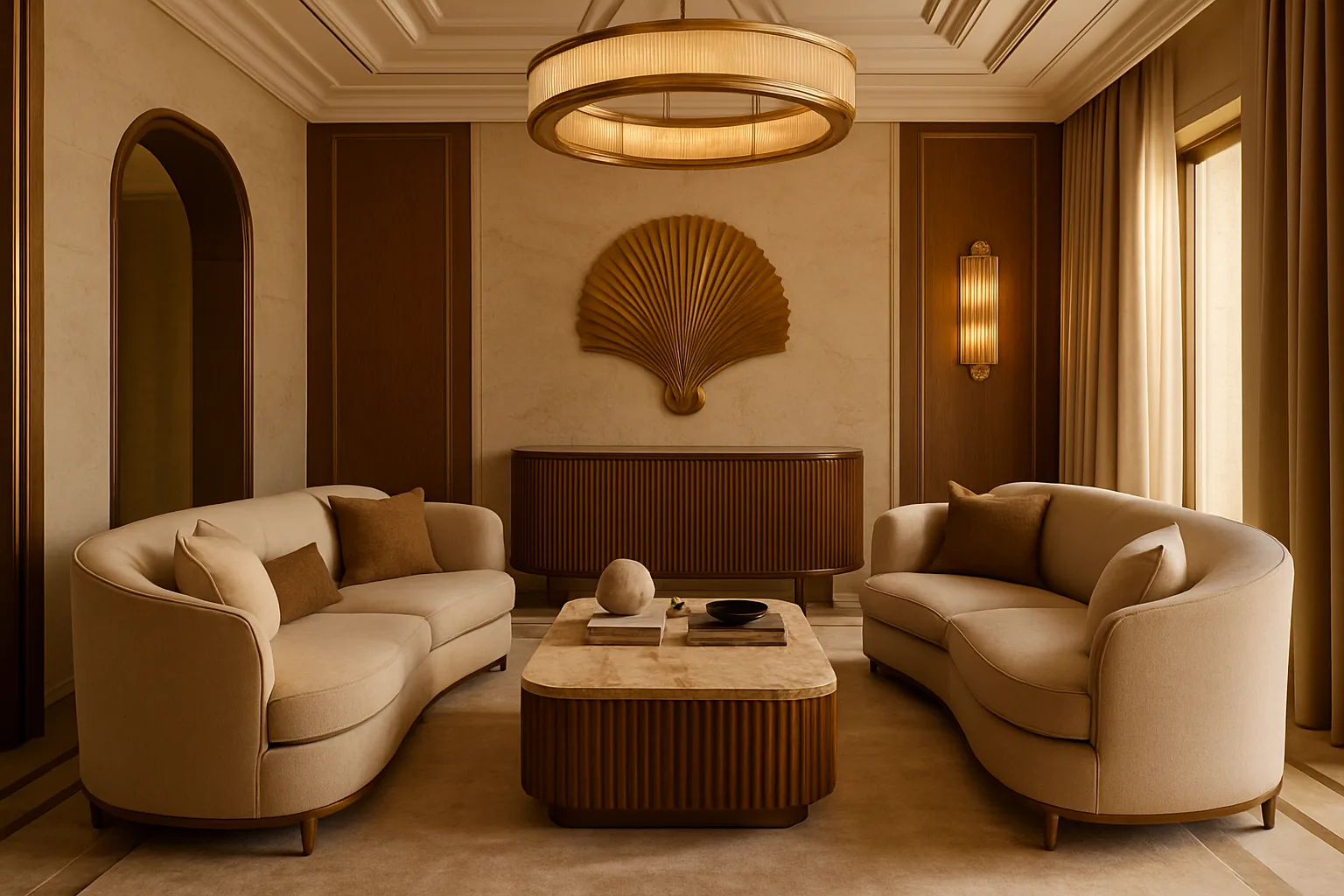
Discover how to blend Art Deco’s geometric glamour with quiet luxury in Saudi villas—brass, marble, jewel tones, and restraint.
What Is Art Deco Interior Design and How Does It Fit Saudi Homes?
Art deco interior design is a style born from 1920s Paris and New York—defined by bold geometric symmetry, rich materials like marble and brass, and a confident yet refined atmosphere. For Saudi homeowners in Khobar or Riyadh, it offers a sophisticated international aesthetic that pairs beautifully with local traditions of hospitality and grandeur. The key is to interpret it through a quiet luxury lens: instead of overwhelming a majlis with mirrored panels and heavy gold, you select a few statement pieces—a sunburst chandelier, a chevron-patterned rug, a brass-inlaid console—and let them breathe against calm, neutral walls.
In Saudi Arabia, where homes often feature spacious majlis, open-plan living areas, and tall ceilings, Art Deco’s love for vertical lines and dramatic symmetry feels almost native. The style’s emphasis on craftsmanship also resonates with the region’s appreciation for bespoke furniture and hand-finished details. However, the desert climate and cultural preference for understated elegance mean you should avoid the maximalist, casino-like versions of Art Deco. Instead, focus on its quieter cousins: matte brass over polished gold, honed marble over high-gloss, and deep emerald or sapphire used as accents rather than wall-to-wall color.
Think of Art Deco as a conversation between eras—the glamour of the 1920s meets the restraint of modern Saudi interiors. A Riyadh villa owner might choose a geometric-patterned marble floor in the entryway, a brass-framed mirror above a cream bouclé sofa, and a pair of sculptural sconces flanking a majlis entrance. These elements nod to the style without shouting it. The result is a home that feels international yet grounded, luxurious yet livable—perfect for families who entertain often but value calm, private retreats.
For those new to the style, start with a single room—perhaps the living room or a home office—and introduce Art Deco through accessories and furniture before committing to architectural changes. This approach allows you to test the waters and ensures the design evolves naturally, reflecting your personal taste rather than a trend. In the sections below, we’ll break down exactly how to achieve this look, from color palettes to lighting, with practical advice tailored to Saudi homes.
How to Choose an Art Deco Color Palette for a Saudi Villa
The foundation of any art deco interior design is its color palette. Classic Art Deco relies on rich jewel tones—emerald green, sapphire blue, amethyst purple, and ruby red—balanced by neutrals like cream, beige, and charcoal. For Saudi homes, where natural light floods through large windows and courtyards, these colors can be used strategically to create depth without darkening a space. Consider a deep emerald accent wall in a home library or a sapphire velvet headboard in a master bedroom, paired with warm ivory walls and oak flooring to keep the room airy.
Quiet luxury interior design, however, favors muted, earthy versions of these hues. Instead of a bright turquoise, opt for a dusty teal; instead of a vivid magenta, choose a muted plum. These softened tones feel more sophisticated and align with the desert landscape outside—think of the pale gold of sand dunes, the deep blue of the night sky, and the green of oasis palms. In a Khobar apartment, you might use a warm terracotta as a base, with brass accents and a single emerald armchair to evoke Art Deco without overwhelming a compact space.
Metallics play a crucial role in Art Deco palettes. Brass, gold, and copper are the traditional choices, but for a quiet luxury approach, brushed brass and antique gold are preferable to shiny, reflective finishes. These metals catch the light subtly, adding warmth and elegance. Use them in light fixtures, cabinet handles, mirror frames, and table legs. In Saudi homes, where majlis often feature intricate ceiling designs, a brass pendant lamp or a gold-leafed ceiling border can tie the room together without dominating it.
Finally, don’t forget the power of contrast. Art Deco thrives on the interplay between light and dark, smooth and textured. Pair a glossy black lacquered console with a matte white marble top, or a velvet sofa in deep burgundy with a silk rug in cream and gold. This tension creates visual interest and prevents the palette from feeling flat. When planning your own space, create a mood board with your chosen colors and materials—this will help you see how they interact before you commit to paint or fabric.
Which Materials Define Art Deco in a Saudi Context?
Materials are the soul of art deco interior design. The style is inseparable from luxurious surfaces: marble, brass, glass, and exotic woods. In Saudi Arabia, where marble is already a staple in flooring and wall cladding, this is a natural fit. Choose a marble with dramatic veining—such as Calacatta or Nero Marquina—for a statement floor or a fireplace surround. In a majlis, a marble wall panel with a geometric inlay pattern can serve as a stunning focal point, echoing the style’s love for symmetry and precision. For more guidance on selecting the right stone, refer to our guide to choosing stone and marble for Saudi homes.
Wood species also matter. Art Deco favors rich, dark woods like walnut, mahogany, and ebony, often with a high-gloss finish. For a quieter luxury feel, consider using these woods in furniture pieces—a walnut dining table with brass inlays, or a mahogany bookshelf with geometric cutouts. In Saudi homes, where wood is less common than stone, incorporating it in select pieces adds warmth and a sense of craftsmanship. Avoid covering entire walls in dark wood, which can feel heavy; instead, let it anchor a room’s furniture.
Brass is perhaps the most iconic Art Deco material. From door handles to lighting fixtures, brass adds a golden glow that instantly evokes the era. In a Saudi villa, use brushed brass for cabinet hardware, faucets, and lamp bases. For a more subtle approach, mix brass with chrome or nickel—this was common in original Art Deco interiors and prevents the space from feeling too uniform. Remember that brass tarnishes over time, so choose a lacquered finish for low-maintenance areas like kitchens and bathrooms.
Glass and mirrors are also essential. Art Deco uses mirrored surfaces to amplify light and create a sense of glamour. In a Saudi home, where privacy is valued, use mirrors strategically—a large arched mirror in the entryway, a mirrored backsplash in a powder room, or a glass-paneled room divider that lets light pass while defining spaces. For a quiet luxury touch, opt for smoked or bronze-tinted glass rather than clear, which feels more contemporary and less ostentatious.
Geometric Patterns: How to Use Them Without Overwhelming Your Space
Geometric patterns are a hallmark of art deco interior design, but they can easily overwhelm a room if used excessively. The key is to apply them with restraint, focusing on one or two areas at a time. In a Saudi living room, a geometric-patterned rug—think sunbursts, chevrons, or stepped arches—can anchor the seating area, while the walls remain a calm, solid color. This allows the pattern to shine without competing with other elements. For more on selecting the perfect floor covering, see our rug placement guide for modern Arabic living rooms.
Another approach is to use geometric patterns in architectural details. A ceiling with a recessed geometric design, a wall panel with a repeating diamond motif, or a floor border with a contrasting marble inlay can add Art Deco character without needing furniture or accessories. In Saudi homes, where ceilings are often high, a geometric ceiling treatment can draw the eye upward and make the space feel even more grand. Work with a skilled contractor to ensure the lines are crisp and precise—this is where the style’s elegance lives.
Textiles offer a simpler way to introduce geometry. Consider throw pillows with a fan or zigzag pattern, a headboard upholstered in a geometric fabric, or curtains with a subtle Art Deco border. These pieces can be changed seasonally or as your taste evolves, making them ideal for those who want to experiment. In a majlis, where floor seating is common, geometric-patterned floor cushions can add visual interest while maintaining comfort.
Finally, remember that negative space is your friend. Art Deco is as much about what you leave out as what you include. A room with a single geometric accent—a patterned screen, a sculptural chair, or a painted arch—will feel more sophisticated than one filled with competing motifs. When in doubt, choose one hero piece and build the rest of the room around it, using solid colors and simple shapes to let it stand out.
Lighting and Furniture: The Art Deco Essentials for Modern Living
Lighting is where art deco interior design truly comes alive. The style is famous for its dramatic fixtures—chandeliers with cascading glass, sconces with geometric backplates, and table lamps with sculptural bases. In a Saudi home, a statement chandelier in the entryway or above the dining table can set the tone for the entire space. Choose one with brass or chrome details and frosted glass shades for a soft, diffused glow that flatters both people and interiors.
For a quiet luxury approach, layer your lighting. Use recessed ceiling lights for general illumination, wall sconces for task lighting in reading corners, and floor lamps for ambient glow. This layering creates depth and allows you to adjust the mood throughout the day—bright and welcoming for afternoon gatherings, dim and intimate for evening conversations. In a majlis, consider a central pendant with a geometric shade, complemented by floor lamps near seating areas to create cozy pockets of light.
Furniture in Art Deco is characterized by clean lines, curved corners, and luxurious upholstery. Think of a sofa with a low, sweeping back and rounded arms, or a dining chair with a fan-shaped backrest. For Saudi homes, where comfort is paramount, choose pieces that are as inviting as they are beautiful. Velvet, leather, and high-quality wool are excellent choices for upholstery, as they feel luxurious and withstand daily use. In a family living room, a velvet sofa in a muted jewel tone can be paired with leather armchairs for a mix of textures. If you’re considering custom pieces, explore our guide to bespoke furniture in Saudi Arabia for inspiration.
When selecting furniture, look for pieces with geometric details—a coffee table with a brass inlay, a sideboard with stepped edges, or a mirror with a sunburst frame. These details tie the room together and reinforce the Art Deco theme without requiring a full overhaul. If you’re working with a tight budget, invest in a few key pieces—a statement chair, a decorative screen, or a lighting fixture—and keep the rest simple. This allows you to achieve the look gradually while maintaining a cohesive design.
What Are the Best Rooms in a Saudi Home for Art Deco?
While art deco interior design can be applied throughout a home, certain rooms lend themselves more naturally to the style. The living room is an obvious choice, as it’s where you entertain guests and make a first impression. In a Saudi villa, this might be the formal majlis or a separate family living area. Use Art Deco elements to create a sense of occasion—a geometric rug, a brass chandelier, and a pair of velvet armchairs can transform an ordinary space into something memorable. For more on arranging these spaces, see our majlis sofa arrangement guide.
The dining room is another ideal setting. Art Deco’s emphasis on symmetry and luxury makes it perfect for formal meals. Consider a round dining table with a marble top and brass base, surrounded by chairs with geometric upholstery. A sideboard with a mirrored back and glass shelves can display fine china or glassware, adding to the glamour. In Saudi homes, where dining often extends to buffets and family-style meals, ensure there’s ample surface space and comfortable seating for all.
Entryways and hallways are often overlooked but offer a prime opportunity for Art Deco. A geometric-patterned floor, a console table with a brass mirror above it, and a sculptural pendant light can set the tone for the entire home. These transitional spaces are perfect for experimenting with bolder patterns, as they’re passed through rather than lingered in. In a Khobar apartment, a narrow hallway can be visually widened with a large mirror and light-colored walls, while a geometric runner adds interest.
Finally, consider the home office or library. Art Deco’s intellectual, sophisticated character suits a space dedicated to work and study. A walnut desk with brass details, a bookshelf with geometric shelving, and a leather chair in a deep green or burgundy create a refined atmosphere that inspires focus. In Saudi Arabia, where remote work is increasingly common, a well-designed home office is a worthwhile investment. Add a Persian rug with a geometric pattern and a brass desk lamp to complete the look.
Practical Tips for Starting Your Art Deco Renovation in Saudi Arabia
Embarking on an art deco interior design project in Saudi Arabia requires careful planning, especially given the region’s climate and cultural context. First, work with a designer who understands both Art Deco principles and local building practices. They can help you source materials like marble and brass from reputable suppliers in Dammam, Riyadh, or Jeddah, and ensure that installations meet Saudi standards for safety and durability. This is particularly important for custom pieces like ceiling treatments or built-in cabinetry. If you’re just starting your search, our guide to choosing an interior designer in Saudi Arabia can help you find the right professional for your project.
Second, consider the practicalities of maintenance. Saudi Arabia’s dusty environment means that high-gloss surfaces and dark colors may show dirt more easily. Choose finishes that are easy to clean—honed marble, matte brass, and stain-resistant fabrics are wise choices. For rugs, select wool or silk blends that can withstand foot traffic and are easy to vacuum. In coastal areas like Khobar, humidity can affect wood and metal, so opt for treated materials that resist warping and corrosion.
Third, plan your budget realistically. Art Deco often involves custom furniture, imported fabrics, and skilled craftsmanship, all of which can be costly. Prioritize the elements that will have the most impact—a statement lighting fixture, a marble floor, or a bespoke piece of furniture—and allocate funds accordingly. If you’re on a tighter budget, focus on smaller accents like throw pillows, vases, and artwork, which can be sourced locally or online without compromising quality.
Finally, take your time. Art Deco is a style that rewards patience and attention to detail. Don’t rush to fill every corner; instead, let the design evolve as you find pieces that resonate with you. Visit showrooms in Khobar and Riyadh, attend design exhibitions, and gather inspiration from international sources. By approaching your renovation with intention, you’ll create a home that feels both timeless and personal—a true reflection of quiet luxury in the Saudi context.
◈ Key Takeaways
- ✦Start with a single room—like the living room or entryway—and introduce Art Deco through a geometric rug, brass lighting, and a velvet accent chair before committing to full renovations.
- ✦Choose a muted jewel-tone palette (dusty teal, plum, emerald) paired with cream and warm oak to keep the look sophisticated and suited to Saudi light.
- ✦Use marble and brass as your primary materials—Calacatta or Nero Marquina for floors or walls, and brushed brass for fixtures and hardware to avoid excessive shine.
- ✦Limit geometric patterns to one or two focal points, such as a patterned floor or a statement rug, to maintain a quiet luxury feel rather than visual chaos.
- ✦Layer lighting with recessed fixtures, sconces, and pendants to create adjustable moods that work for both daytime family life and evening entertaining.
Frequently Asked Questions
❓ How to achieve art deco interior design in a Saudi home?
To achieve art deco interior design in a Saudi home, focus on geometric patterns, bold metallic accents (like gold or brass), and luxurious materials such as velvet and marble. Incorporate symmetrical layouts and statement lighting, and consider blending these elements with traditional Saudi touches like mashrabiya screens for a unique fusion. For a full room redesign, expect costs to range from SAR 20,000 to SAR 100,000 depending on the scale and quality of materials.
❓ What is art deco interior design?
Art deco interior design is a style that emerged in the 1920s and 1930s, characterized by rich colors, bold geometry, and decadent detail. It emphasizes symmetry, glamour, and the use of high-end materials like lacquer, glass, and exotic woods. In Saudi homes, this style can be adapted to create a luxurious yet modern ambiance that respects cultural aesthetics.
❓ What are the key elements of art deco interior design style?
Key elements of art deco interior design style include geometric shapes (like chevrons and sunbursts), metallic finishes, mirrored surfaces, and bold color contrasts such as black and gold or navy and silver. Furniture often features curved lines and upholstery in velvet or leather. For a Saudi context, you can incorporate these elements while ensuring the design aligns with local tastes and privacy needs.
❓ How much does art deco interior design cost in Saudi Arabia?
The cost of art deco interior design in Saudi Arabia varies widely based on the scope and materials. For a single room, you might spend between SAR 15,000 and SAR 50,000, while a full home redesign could range from SAR 100,000 to SAR 500,000 or more. Hiring a professional designer in Khobar typically costs 10-15% of the total project budget.
❓ Can art deco interior design be combined with traditional Saudi decor?
Yes, art deco interior design can be beautifully combined with traditional Saudi decor. For example, you can pair art deco geometric patterns with Arabic calligraphy or use mashrabiya woodwork as a feature wall. This fusion creates a unique, culturally relevant aesthetic that honors heritage while embracing modern glamour.
Ready to Transform Your Space?
Ready to bring Art Deco’s timeless elegance into your Saudi home? Book a consultation with SB Interior Design today and let’s craft a space that’s uniquely yours.
SB Interior Design
Quiet Luxury Interior Design — Khobar, Saudi Arabia