Discover how to elegantly integrate Arabic calligraphy into modern luxury interiors, blending cultural heritage with contemporary design. In 2026, this art form is redefining luxury homes across Saudi Arabia, from Khobar villas to Riyadh high-rises, as homeowners seek ديكورات that tell a story and تصميم داخلي rooted in identity. This year, the trend has evolved beyond simple wall art — calligraphy is now a structural and architectural element, shaping ديكور سقف designs and defining entire rooms.
Incorporating Calligraphy in Modern Arabic Interior Design
Arabic calligraphy is more than just an art form; it is a profound expression of cultural identity and heritage. In modern Arabic interior design, calligraphy serves as a bridge between tradition and contemporary aesthetics, offering a unique touch to luxury homes. This integration requires a thoughtful approach to ensure that the calligraphy complements the overall design rather than overwhelming it. By carefully selecting the style, scale, and placement of calligraphic elements, homeowners can achieve a harmonious balance that reflects both their personal taste and cultural roots. In 2026, the most sought-after مصمم ديكور professionals are those who treat calligraphy as an architectural material — something to be carved, lit, and layered — rather than simply hung on a wall. For more insights on integrating cultural elements, check out our services.
How Do You Integrate Arabic Calligraphy Into a Modern Luxury Home?
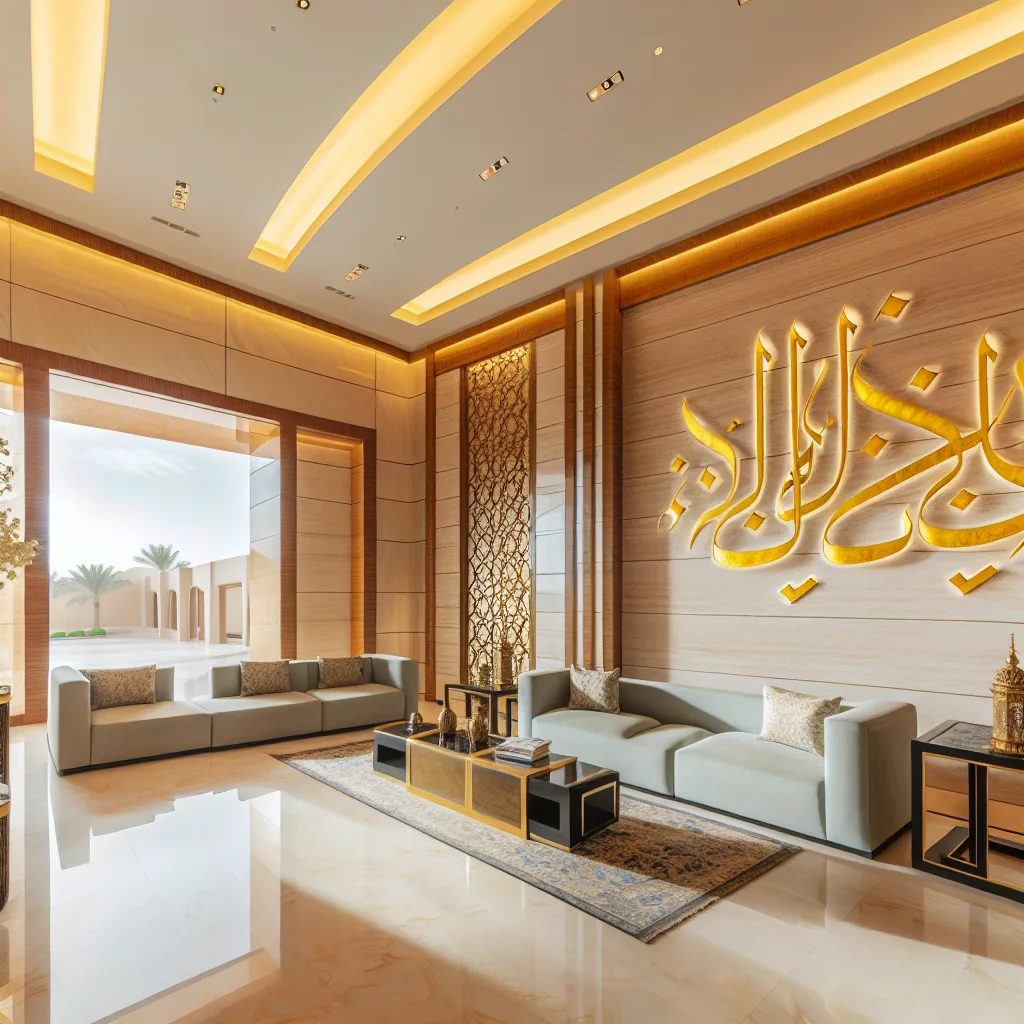
Arabic calligraphy is integrated into modern luxury homes through feature walls, custom furniture inlays, textiles, and backlit panels, using materials like marble, walnut, or brass paired with neutral or jewel-toned palettes. In Saudi Arabia’s 2026 market, the strongest results come from limiting calligraphy to one or two focal points rather than scattering it across a room. This approach aligns with the rising search for ديكور المنزل that balances artistry with restraint, a key trend in luxury ديكورات this year. A notable shift in 2026 is the move toward ديكور سقف integration — calligraphy is now being embedded into ceiling designs, with recessed lighting casting the script onto walls and floors, creating an immersive, ambient effect that transforms the entire spatial experience.
Key takeaway: Successful integration depends on three decisions made together — script style, material, and lighting, not on any single decorative object. In 2026, lighting has become the most critical of these three, with smart LED systems allowing homeowners to change the mood and visibility of their calligraphy throughout the day.
What Is Modern Arabic Calligraphy in Interior Design?
Key takeaway: Modern Arabic calligraphy in interiors means rendering traditional scripts (such as Thuluth or Diwani) in contemporary materials and formats — gold-leafed marble, laser-cut wood screens, or LED-backlit panels — rather than the painted manuscripts or mosque-style tilework of historical use.
Arabic calligraphy is the artistic rendering of Arabic script, historically used in religious texts, manuscripts, and architecture. In interior design, it is repurposed as a decorative and cultural element: a single word, name, or verse rendered as sculpture, wall art, or an inlay. Thuluth script is known for elongated, curved strokes and is common in large feature pieces; Diwani script is denser and more ornamental, often chosen for smaller framed pieces or textiles. The “modern” distinction lies in materials and technology: digital projection, backlighting, and mixed-metal fabrication rather than a change to the script itself. In 2026, homeowners searching for مصمم ديكور increasingly request calligraphy that feels architectural — integrated into ديكور سقف designs or carved into structural columns — rather than applied as surface decoration. This architectural approach is particularly popular in Riyadh compound villas, where open-plan layouts allow calligraphy to be viewed from multiple angles, making it a true design feature rather than a flat accent.
How Do You Incorporate Calligraphy Into a Room?
Key takeaway: The two most common entry points are a feature wall (for maximum visual impact) and smaller furniture or textile accents (for a subtler, layered effect). In 2026, a third option has emerged: ceiling-integrated calligraphy, which offers a dramatic yet space-saving solution for high-rise apartments.
Feature Walls and Focal Points
A feature wall uses one large calligraphic piece — often gold leaf on marble, or a carved wood panel — as the visual anchor of a living room or entryway. This works because a single, well-lit focal point reads as intentional design rather than clutter, which is why designers typically recommend limiting a room to one calligraphic feature wall rather than combining it with several smaller pieces competing for attention. For ديكورات مجالس, a feature wall with a verse from the Quran or a poetic line creates a serene backdrop that elevates the entire gathering space. In 2026, the trend is toward oversized, floor-to-ceiling installations that make the calligraphy feel like part of the architecture itself, often using backlit onyx or marble to create a warm, glowing effect that changes throughout the day.
Digital and Smart Calligraphy Installations
A newer option is the LED-backlit panel, which displays a name or verse and can rotate content via a connected app. These are increasingly used in Riyadh high-rise apartments where wall space is limited but homeowners still want a strong cultural statement. Because the installation is electronic, it requires the same planning as any built-in lighting: power routing, a licensed electrician, and coordination with the ceiling or wall contractor before drywall closes. In 2026, smart calligraphy panels are also being integrated into ديكور سقف designs, where a ceiling-mounted panel projects calligraphy onto a wall or floor, creating an ever-changing focal point without occupying wall space. This is particularly popular in Riyadh executive apartments, where homeowners want a dynamic, tech-forward aesthetic that still honors tradition. The latest models now sync with home automation systems, allowing the calligraphy to change color or intensity based on the time of day or the homeowner’s mood.
Calligraphy in Majlis and Living Room Design
For ديكورات مجالس رجال حديثة, calligraphy is often placed above the main seating area or integrated into the majlis wall paneling. A popular 2026 trend is using calligraphy as a border or frame around a central artwork or mirror, rather than as the sole focal point. This subtle integration respects the majlis tradition of hospitality while adding a contemporary edge. Homeowners searching for ديكورات مجالس are increasingly asking for calligraphy that matches the room’s color scheme — gold on cream for a warm, inviting feel, or white on navy for a bold, modern statement. Another emerging trend is the use of calligraphy in ديكورات مجالس رجال حديثة as a ceiling border, where the script runs along the perimeter of the room, framing the space and drawing the eye upward. This technique is especially effective in majlis with high ceilings, creating a sense of grandeur and intimacy simultaneously.
What Colour Palettes Pair Well With Arabic Calligraphy?
Key takeaway: Neutral backgrounds (beige, ivory, taupe) make script legible and timeless; jewel tones (emerald, sapphire) create drama but need a muted counter-colour; monochrome schemes rely on contrasting finish (matte vs. gloss) rather than contrasting colour.
Three approaches work reliably. First, neutral-on-metallic: a warm ivory or sand wall with brushed brass or gold script, which reads as approachable and works in family living spaces. Second, dark-and-bold: a charcoal, deep teal, or navy accent wall with white or pale gold calligraphy, which creates a gallery-like effect suited to a single statement room rather than a whole home. Third, textural monochrome: the wall and the script are the same colour family, but different finishes (matte wall, glossy script, or vice versa) so the calligraphy catches light differently through the day without relying on colour contrast at all. In 2026, the trend toward ديكور المنزل that feels both luxurious and grounded has made earthy neutrals — terracotta, sand, and warm grey — a popular backdrop for calligraphy, especially in Khobar villas where natural light is abundant. These earthy tones pair beautifully with the region’s natural materials, such as travertine and limestone, creating a cohesive, organic feel that resonates with the modern Saudi homeowner’s desire for authenticity.
How Can Calligraphy Be Added to Furniture and Decor?
Key takeaway: Furniture integration ranges from subtle (embroidered cushions, a single hand-painted plate) to structural (inlaid dining tables, laser-cut room-divider screens), and the right level depends on how much of a focal statement the room already has elsewhere.
Custom furniture — a coffee table with a carved calligraphic pattern, or a headboard with an inlaid verse — turns a functional object into the room’s cultural centrepiece, which works best when the rest of the room stays visually quiet. For a lighter touch, embroidered cushions, a painted ceramic vase, or a single wall-mounted plate add cultural depth without competing with a feature wall elsewhere in the home. Laser-cut wood or acrylic screens are a third option, functioning as a room divider (commonly used to separate a majlis from a dining area) while filtering light through the cut script. A simple rule that prevents overcrowding: if a room already has a calligraphic feature wall, keep furniture and textiles free of additional script. For ديكورات مجالس, a laser-cut screen with calligraphy can define the seating area while adding privacy and visual interest. In 2026, there is a growing demand for bespoke, handcrafted furniture pieces that incorporate calligraphy in unexpected ways — such as a dining table with a calligraphic inlay that is only visible when the table is extended, or a console table with a hidden calligraphic drawer front that reveals itself when opened. These hidden details appeal to the luxury homeowner’s appreciation for craftsmanship and storytelling.
How Do You Lay Out a Room With Calligraphic Elements?
Key takeaway: The layout should direct the eye toward the calligraphic focal point without forcing furniture into awkward positions. Seating should face the calligraphy at a comfortable viewing angle, and traffic flow should not cut across the primary sightline.
When laying out a room with calligraphic elements, start by identifying the primary viewing position — usually the main seating area or the entry point to the room. The calligraphy should be placed at eye level (or slightly above) and centered on the wall, with furniture arranged to face it naturally. In a majlis, for example, the main sofa should be positioned directly opposite the calligraphic feature wall, with side seating angled to create a conversational circle that still respects the focal point. In a living room, the calligraphy might be placed above the fireplace or media console, with the seating arranged to frame it. Avoid placing large furniture pieces directly in front of the calligraphy, as this blocks the view and diminishes the impact. In 2026, designers are also considering the flow of natural light — calligraphy should be positioned so that it catches the morning or afternoon sun, creating dynamic shadows and highlights that change throughout the day. For ديكورات مجالس, this often means placing the calligraphy on a wall that receives indirect light, avoiding harsh glare that can wash out the script.